loola
A QA platform that puts test management, quality and risk scanning, and compliance in one loop.
- kind
- Client work
- we did
- Product design, design system
- when
- Jul to Aug 2026
- status
- Pre-launch
the result
Designed and in pre-launch with The Bug Detective; early access at withloola.com.
- 3
- pillars: test management, quality and risk, compliance
- 75
- product screens designed
- 1
- design system shared by every screen
the question
why do testing, scanning and compliance live in three tools?
what we made
The product design for a QA platform that keeps test management, scanning and regulatory compliance in one loop, with AI that drafts test cases for people to review.
the story
test management
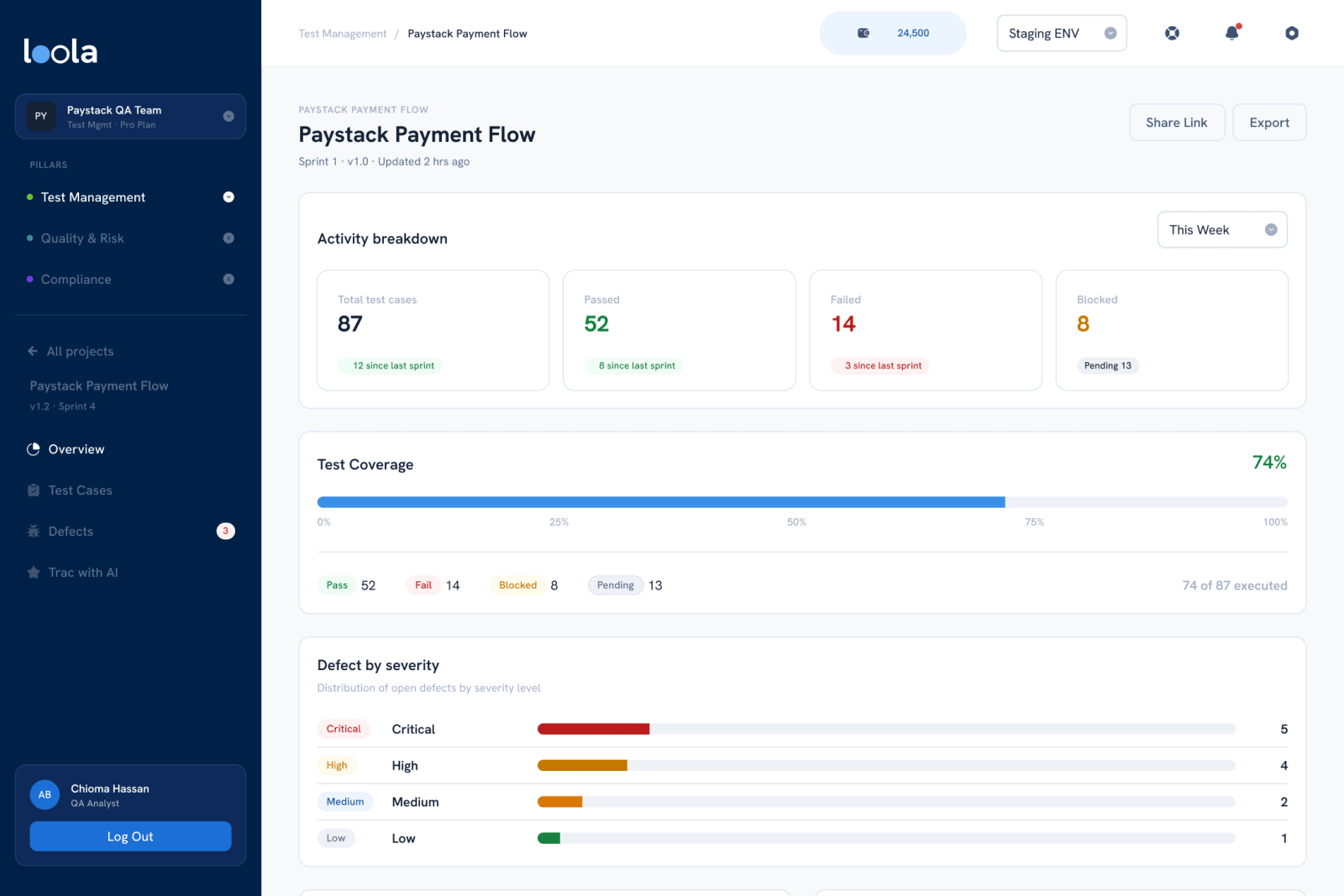
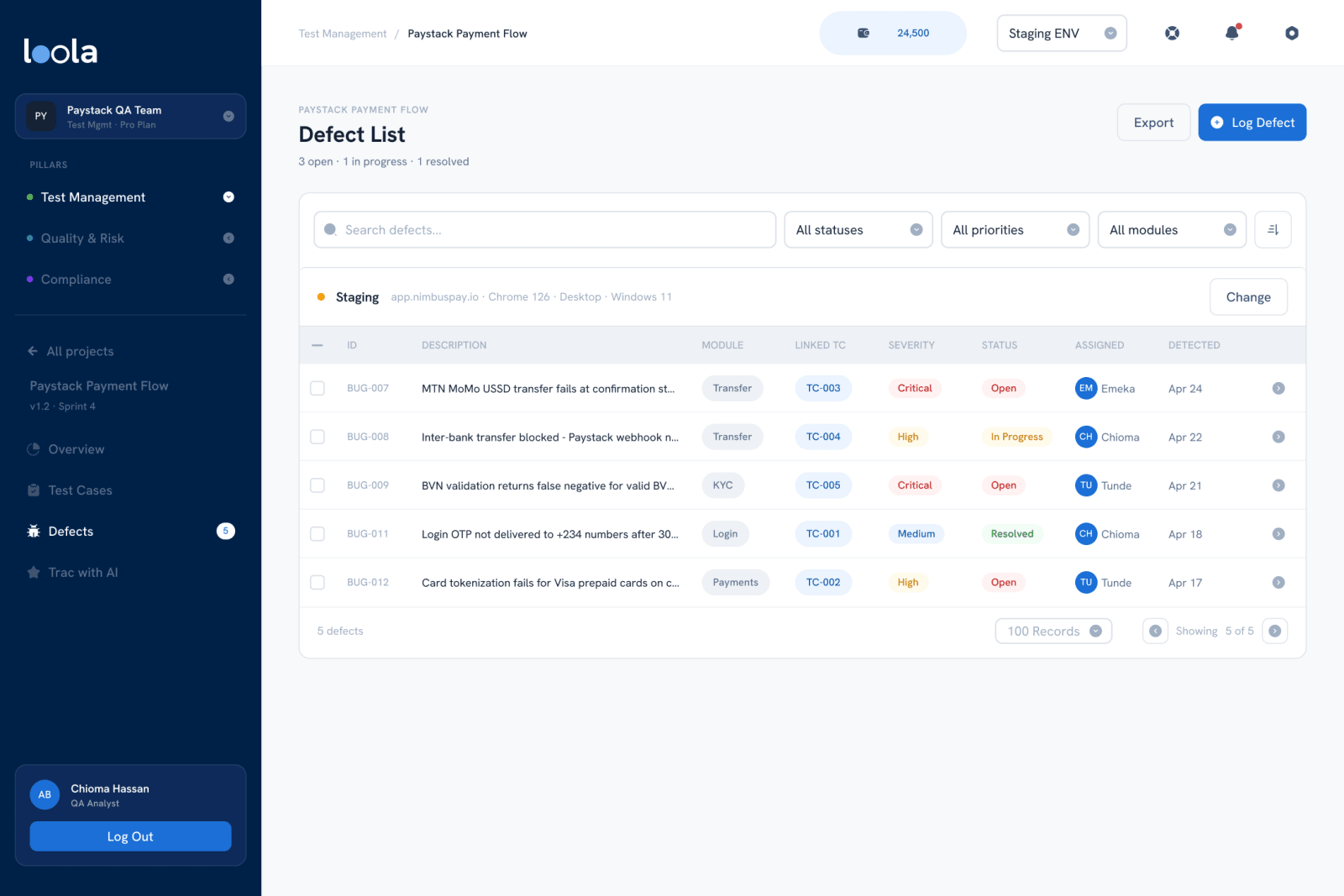
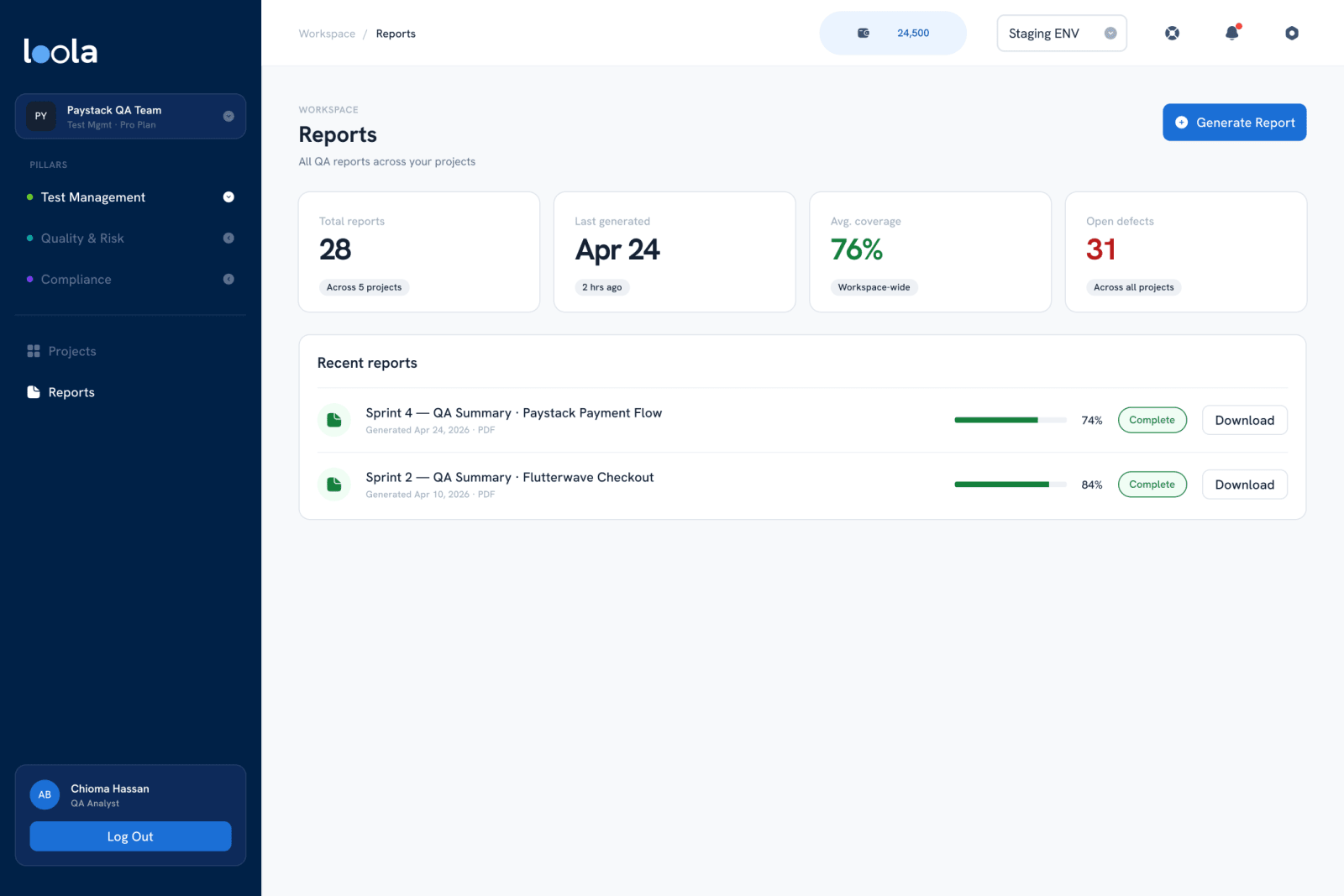
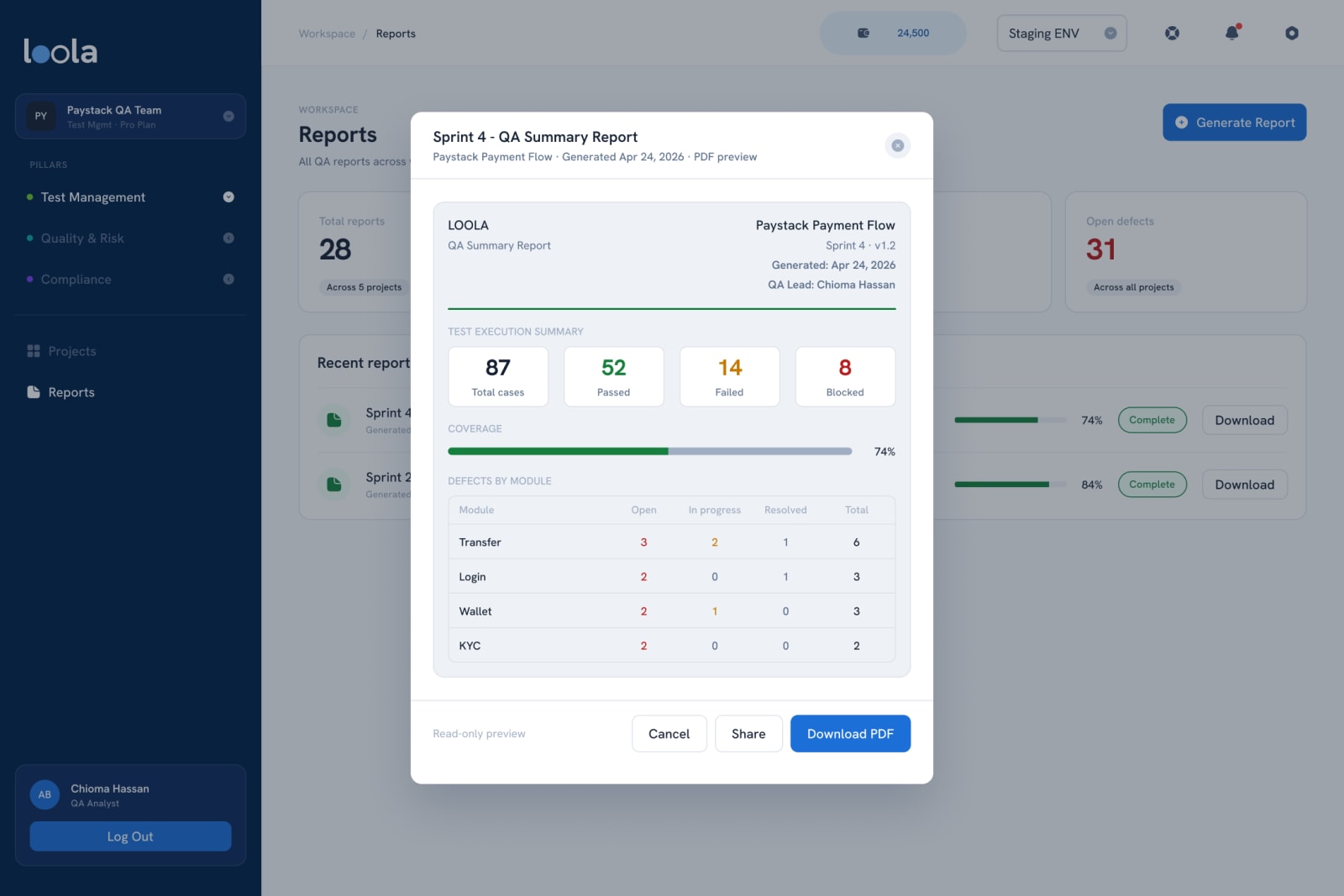
Each project opens on an overview: total cases, passed, failed and blocked, coverage against what's been executed, and defects by severity. Defects link back to the test case that caught them and carry the environment they were found in. At the end of a sprint, a QA summary report is a click away, previewed before it's downloaded as a PDF.
quality and risk scanning
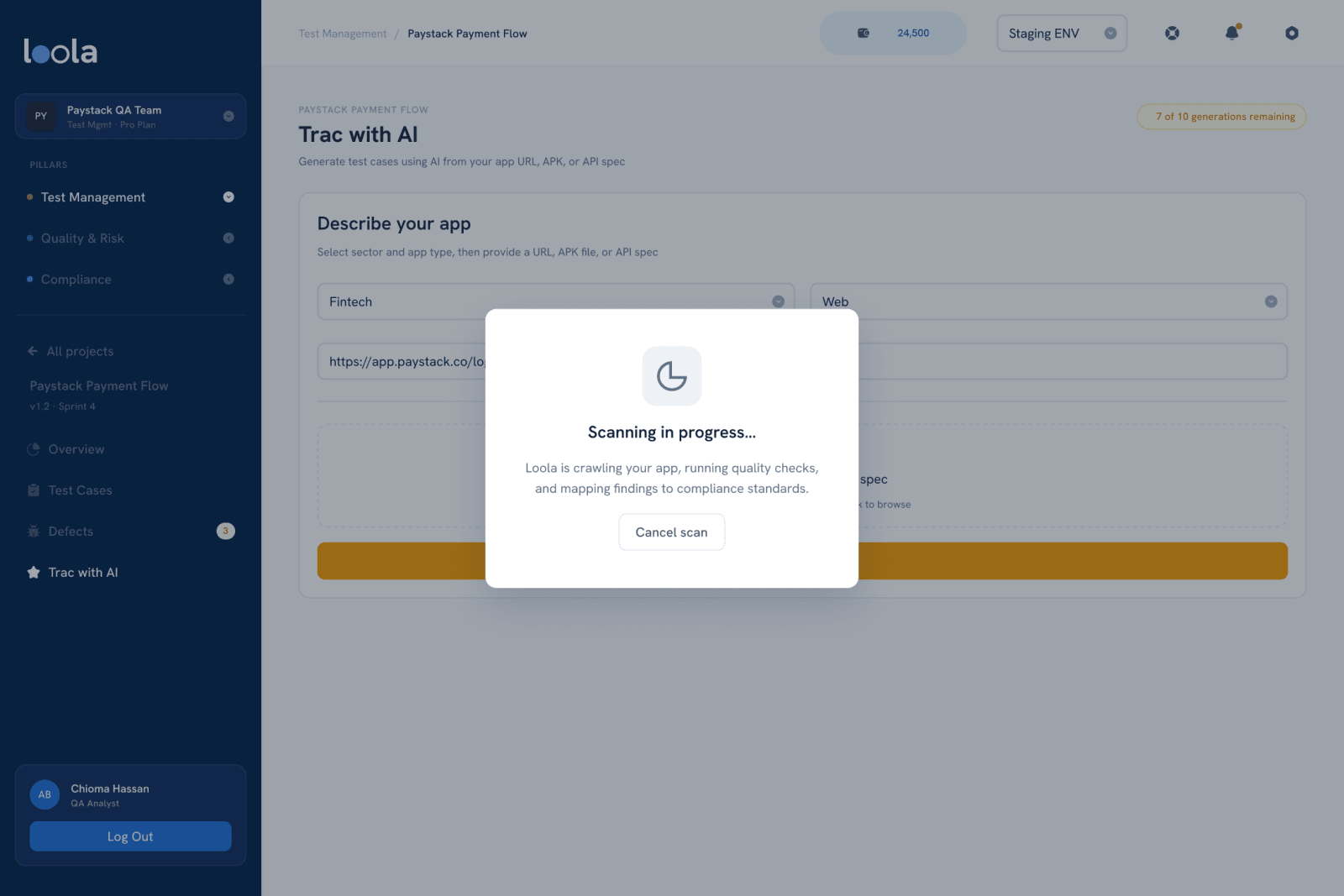
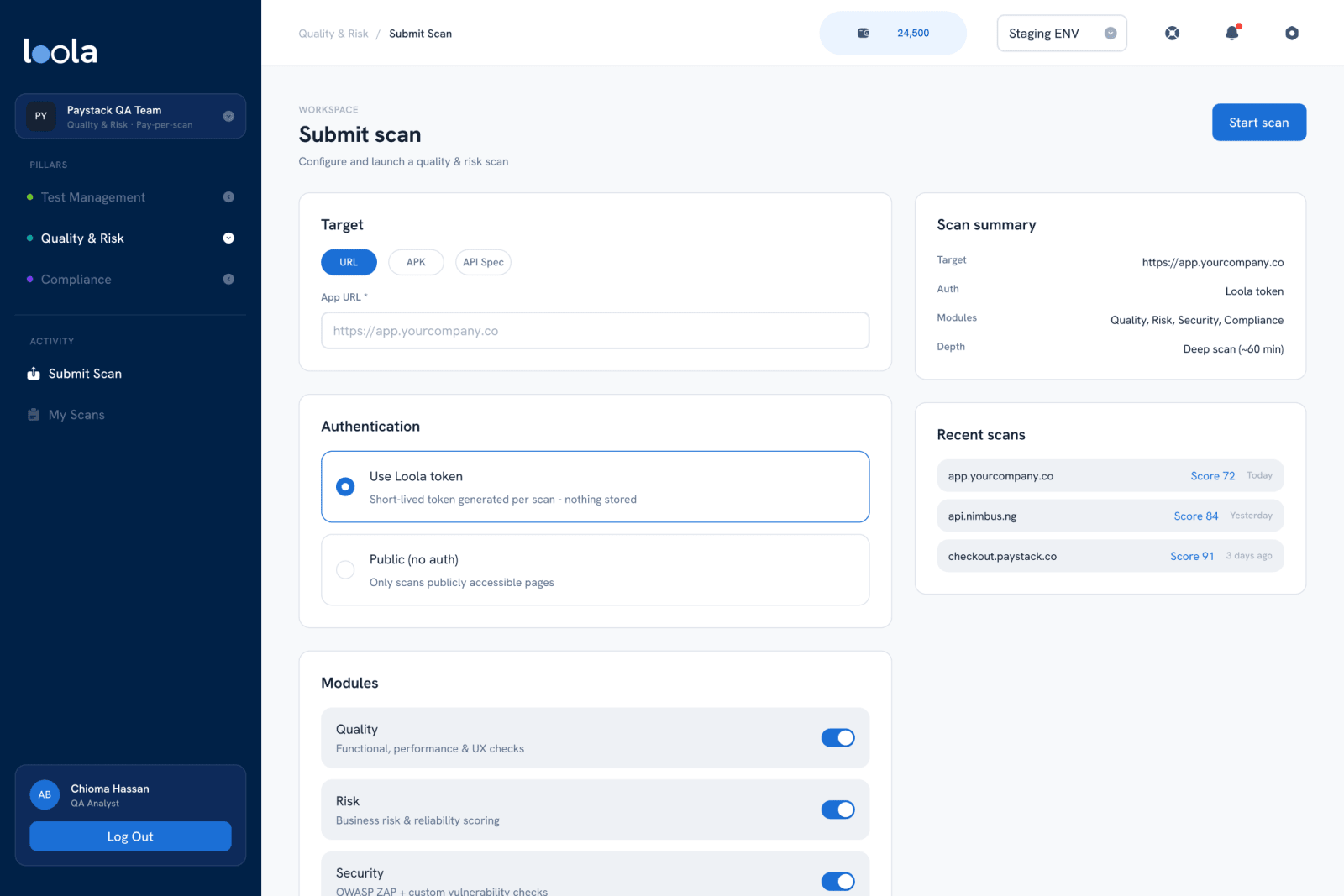
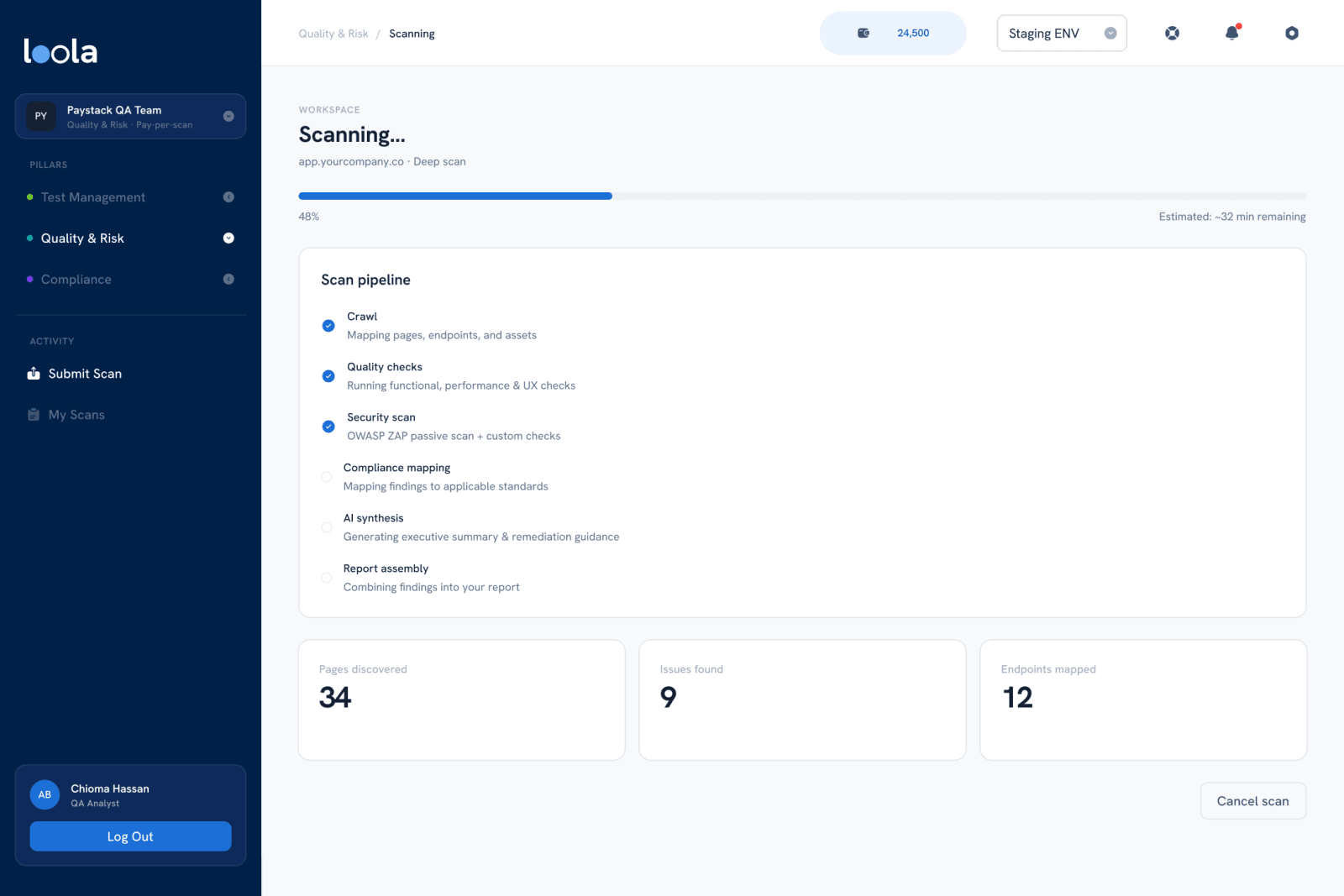
You pick a target (a URL, an APK or an API spec), choose how Loola signs in, and toggle the modules: quality, risk, security and compliance. While it runs, the scan shows its pipeline step by step (crawl, quality checks, security scan, compliance mapping, AI synthesis, report assembly) with pages, issues and endpoints counted live, so a long scan never looks stuck.
compliance
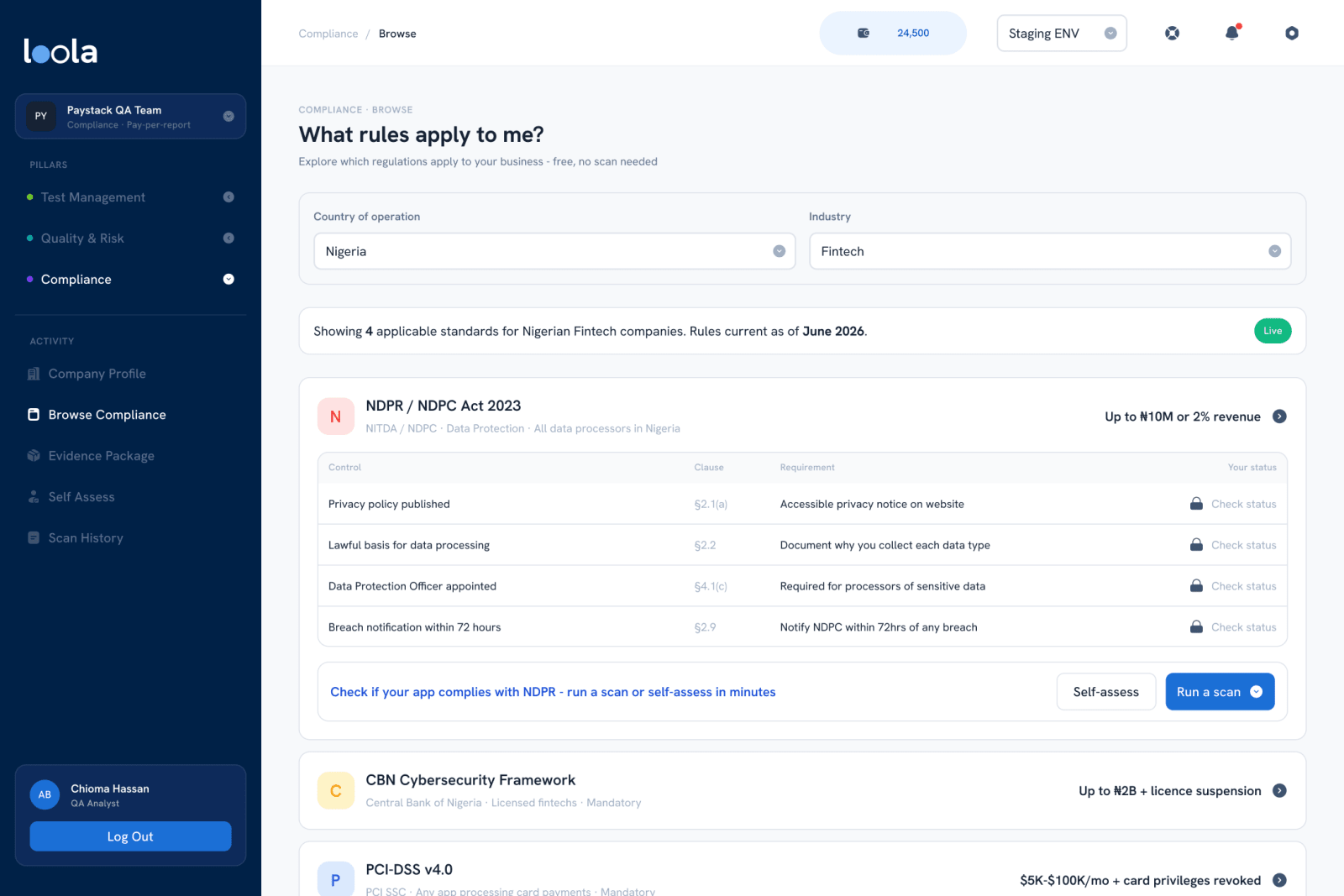
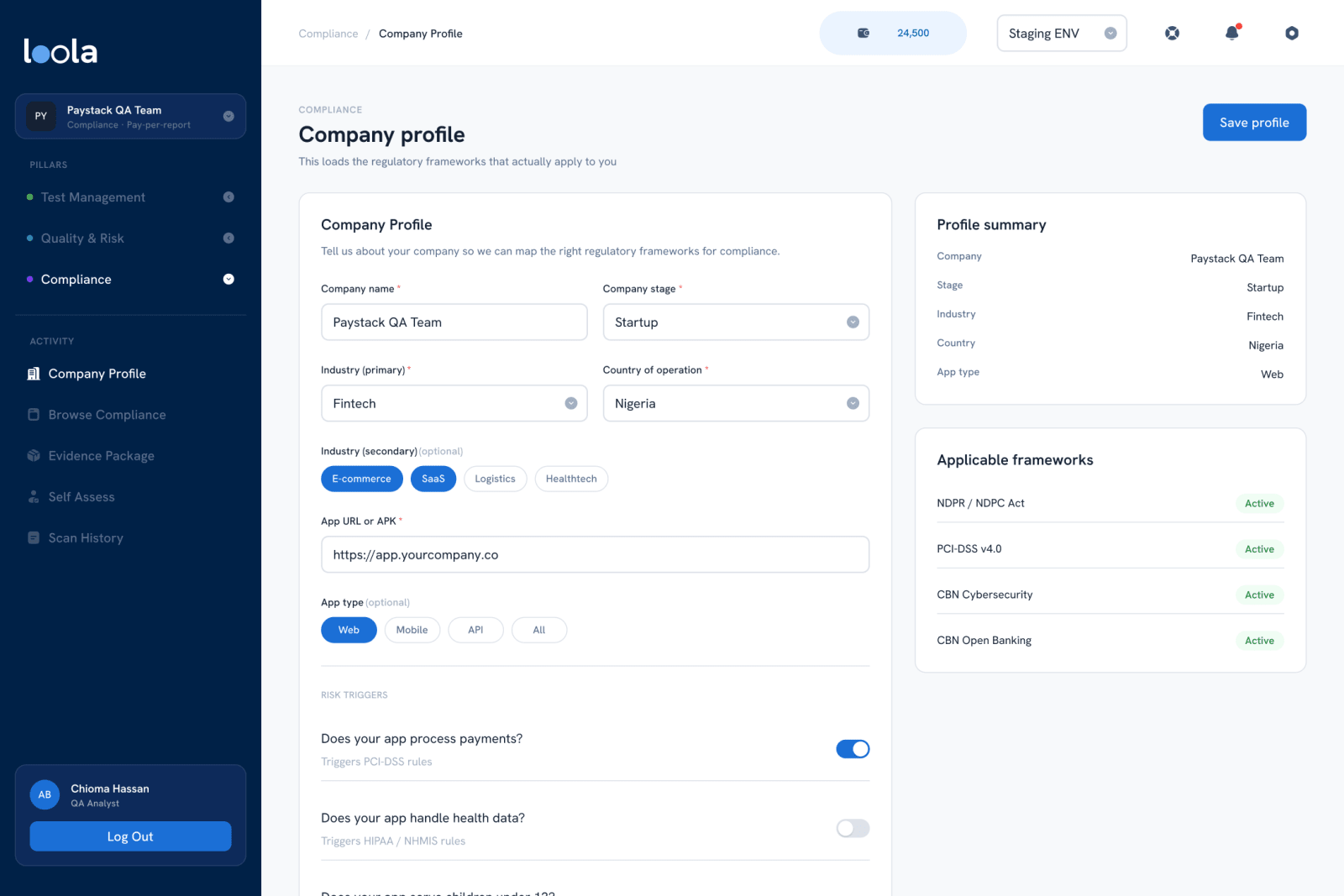
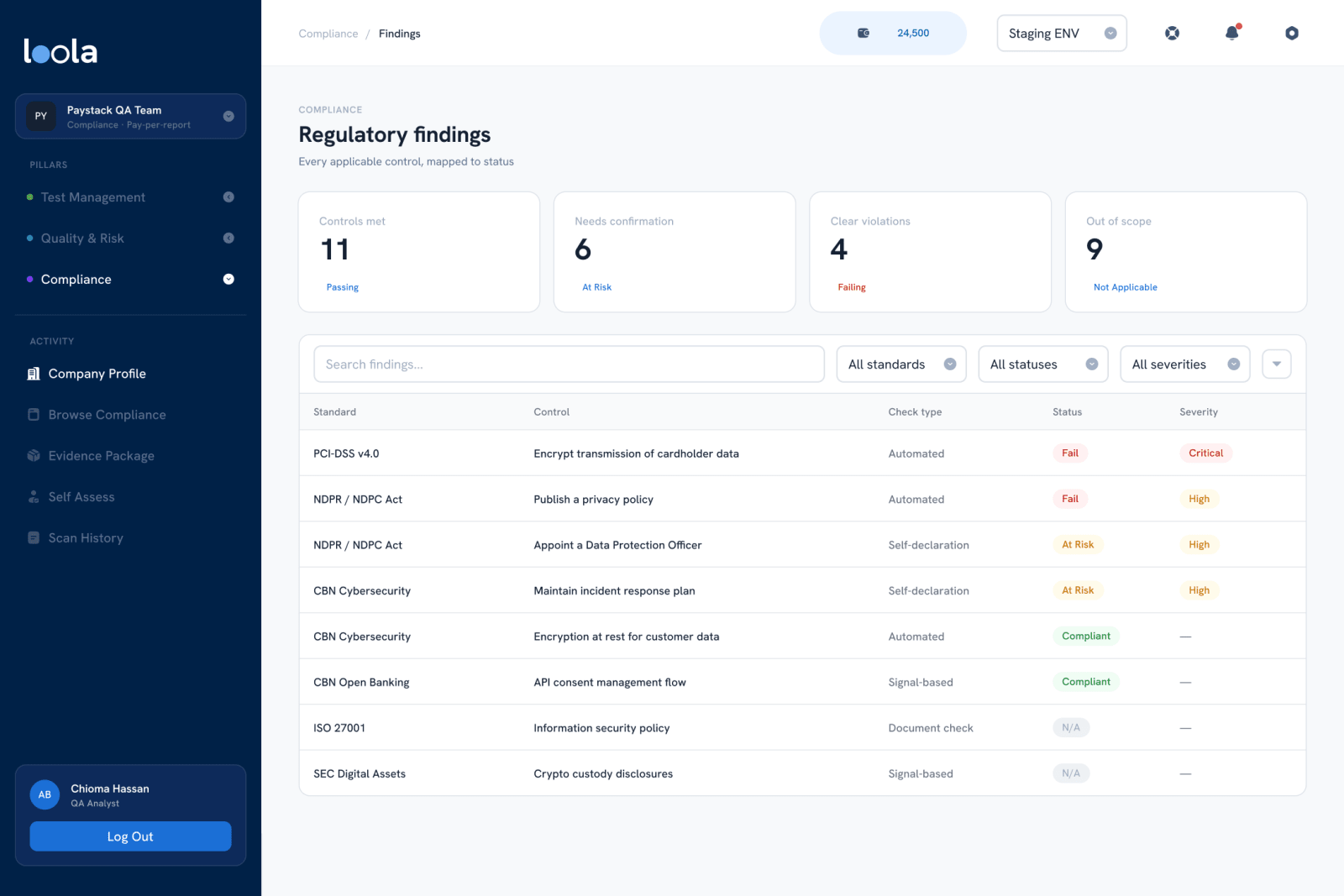
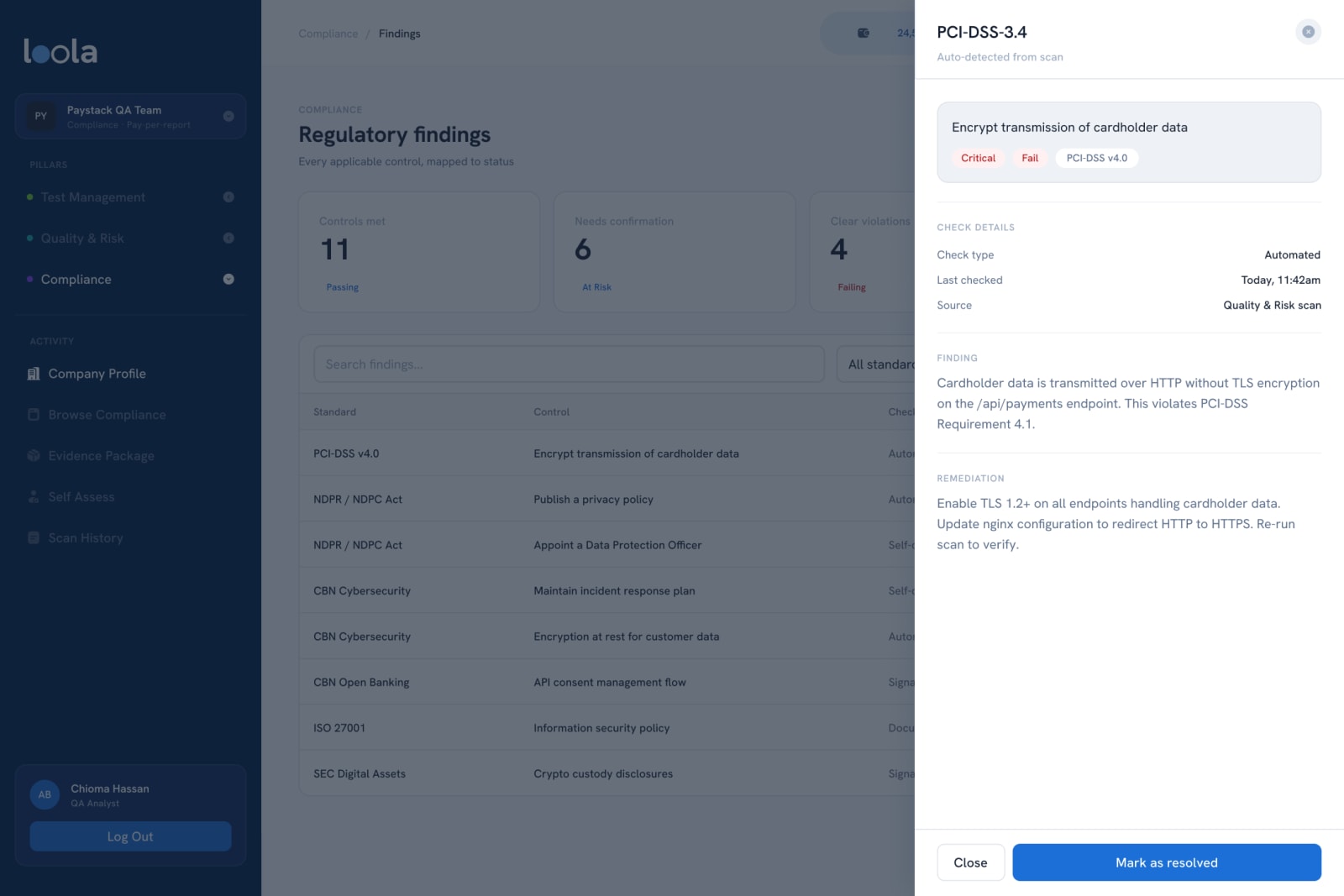
By starting with the question teams actually ask: what rules apply to me? Choose a country and an industry and Loola lists the frameworks, their controls and what failing them costs, free, before any scan. A short company profile sharpens it: process payments and PCI-DSS applies; handle health data, serve children or operate in the EU and other rules join. Try the logic below.
ai-drafted test cases
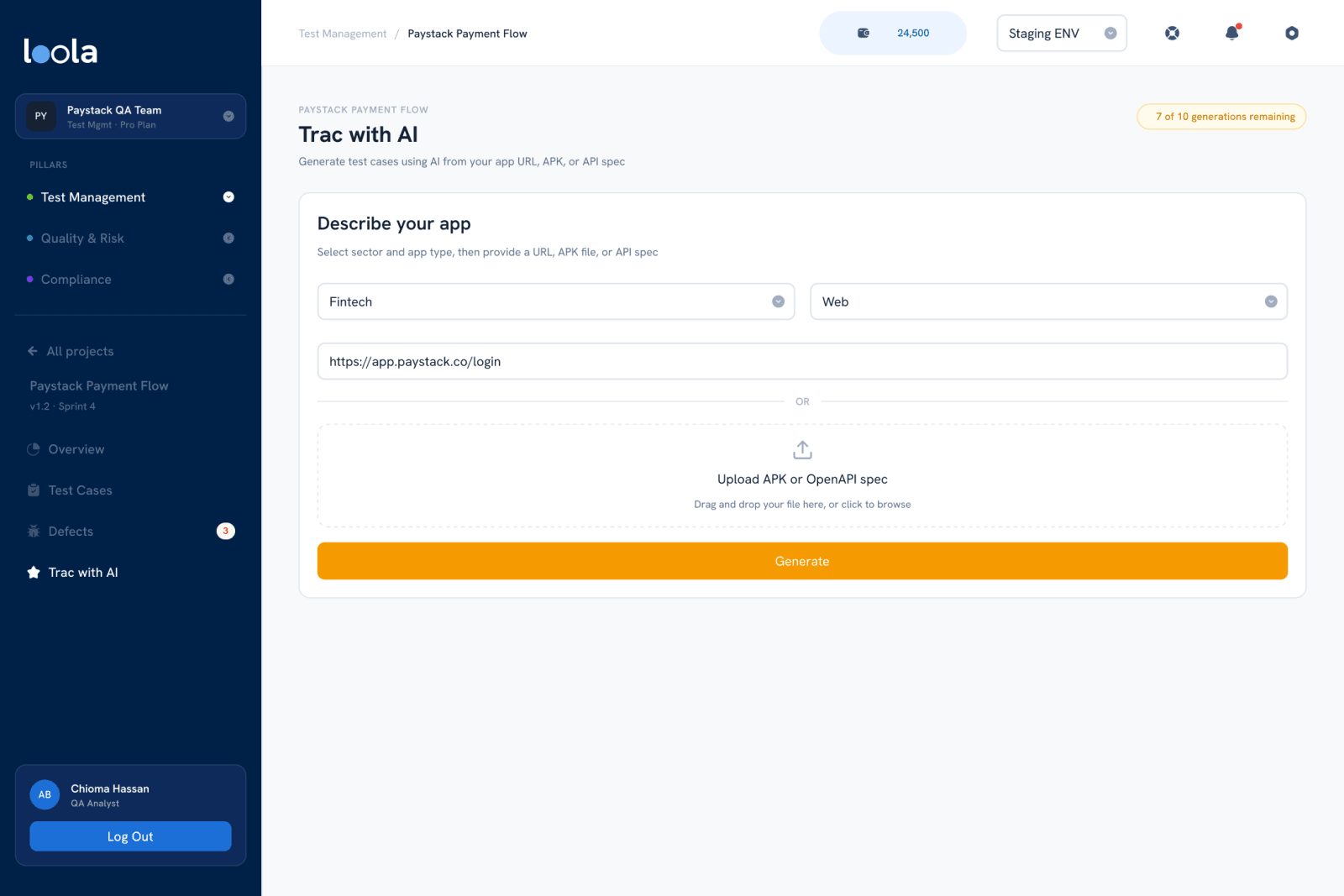
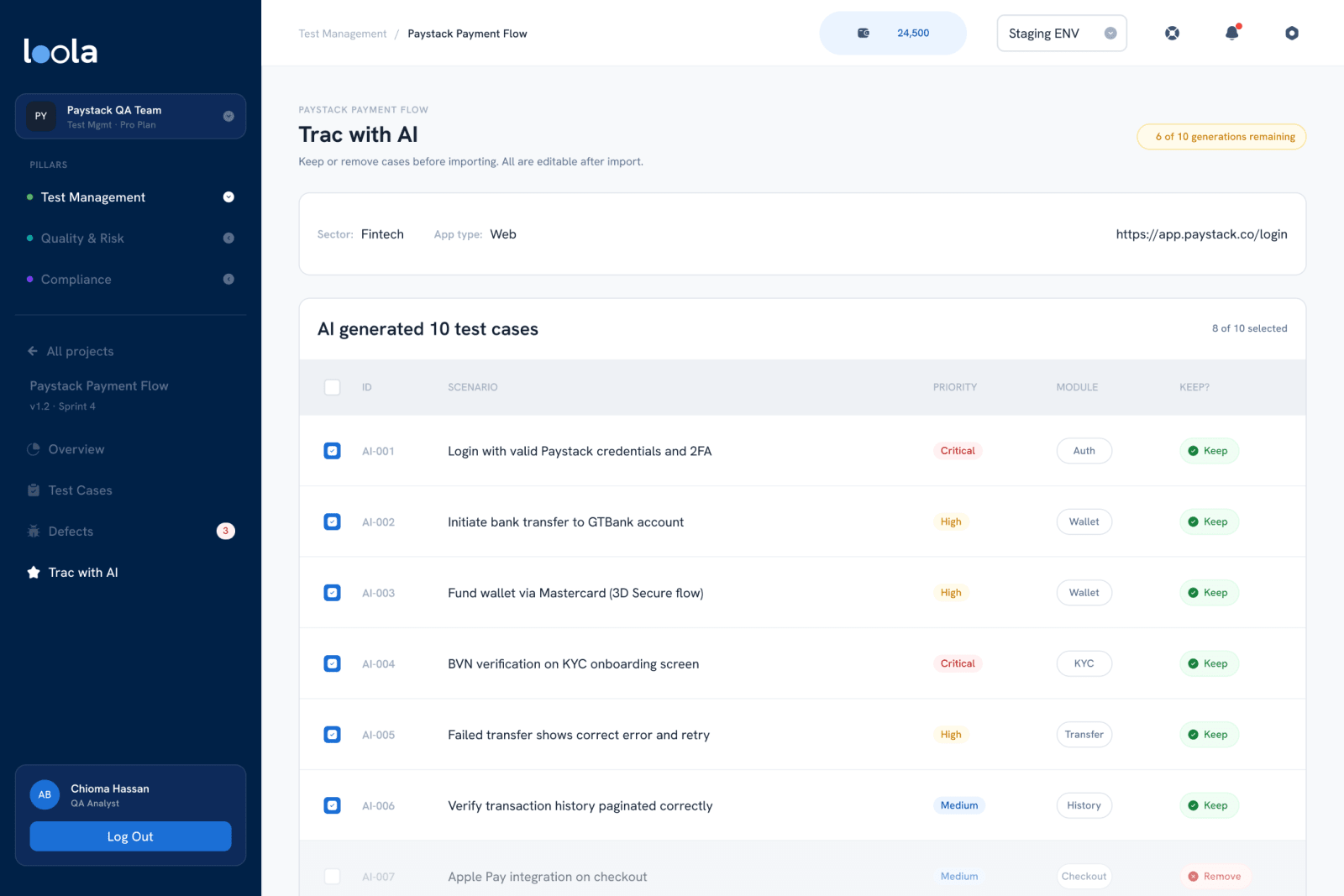
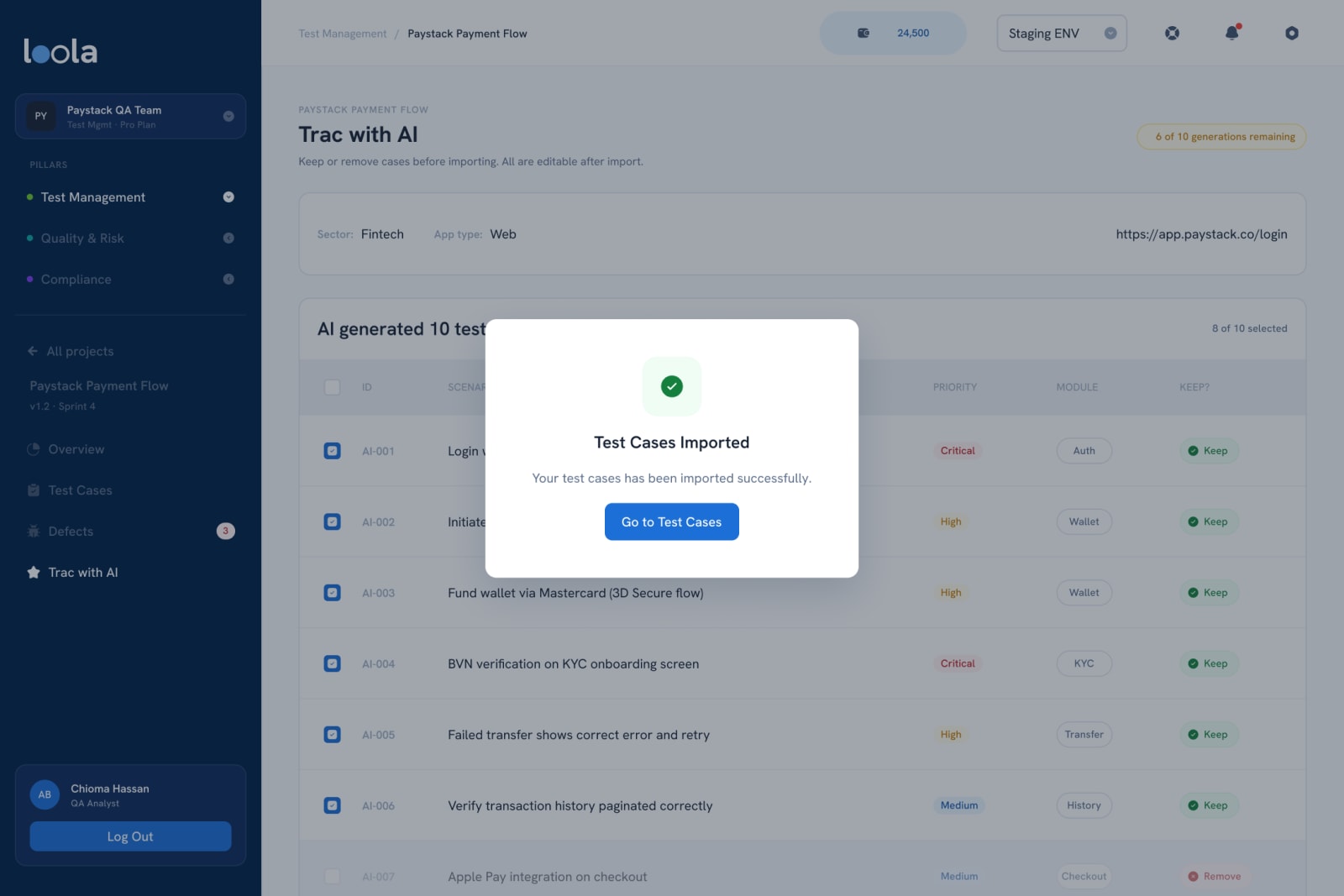
In Trac with AI. You describe your app with a URL, an APK or an OpenAPI spec, and Loola generates test cases for it. We designed the results as a review step, not an import: every generated case shows its scenario, priority and module with Keep or Remove, and nothing lands in the project until you choose. Generations are counted on screen, so the cost is never a surprise.