spendprofile
Turns Nigerian bank statements into a clear picture of your money, for individuals, businesses and developers.
- kind
- Our own product
- we did
- Brand, product, engineering, AI
- when
- Oct 2025 to now
- status
- Live
the result
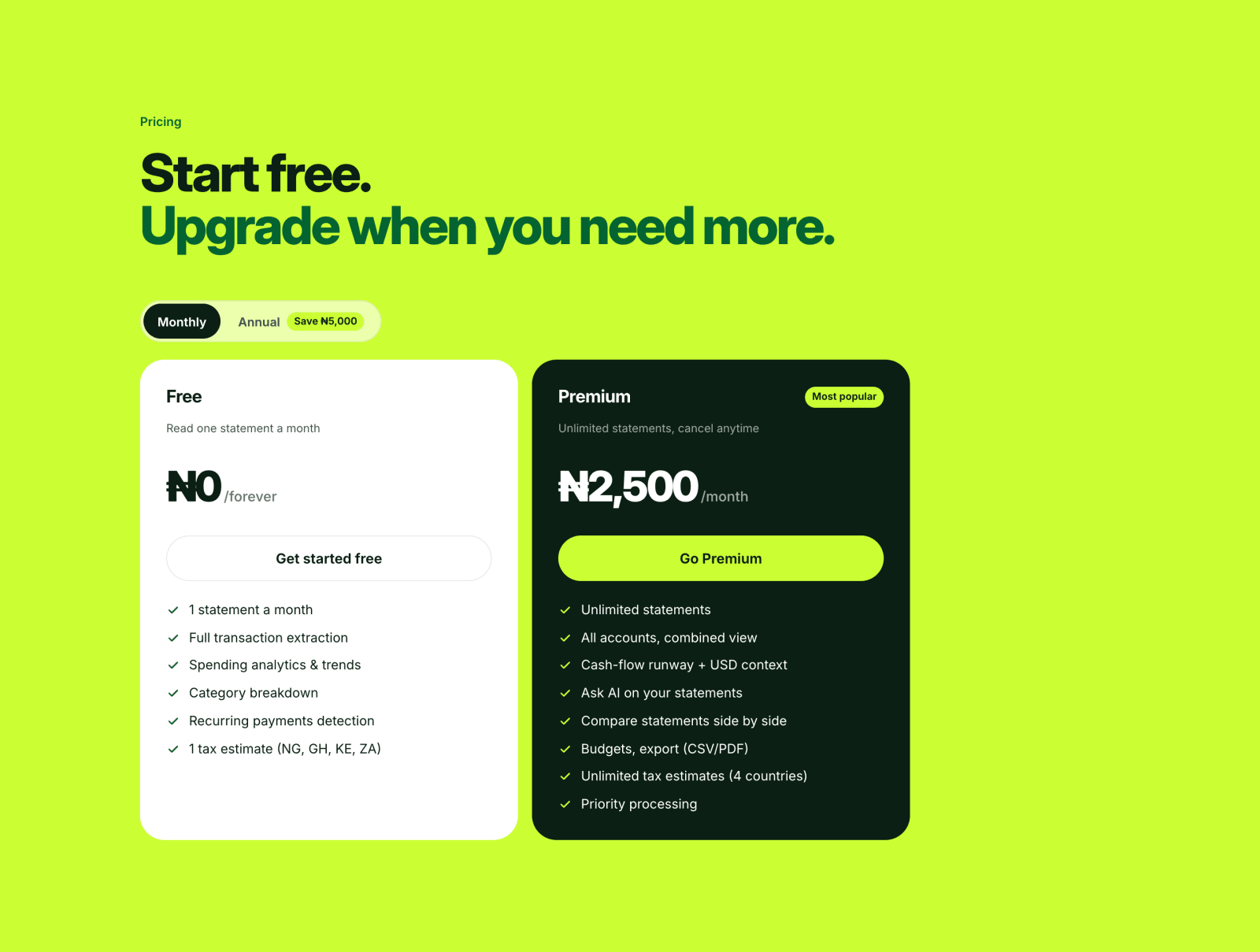
Live with paid Premium subscriptions, a business API and portal, and an open bank-data library on npm and PyPI.
- 14
- Nigerian banks it can read
- 3
- products on one engine
- 7 days
- until a statement auto-deletes
- 0
- bank passwords asked for
the question
what can a bank statement tell you once something reads it properly?
what we made
One extraction engine behind a consumer app, a business API and an open developer platform. It takes the statement PDF people already have and turns it into a reconciled picture of their money.
the story
the app
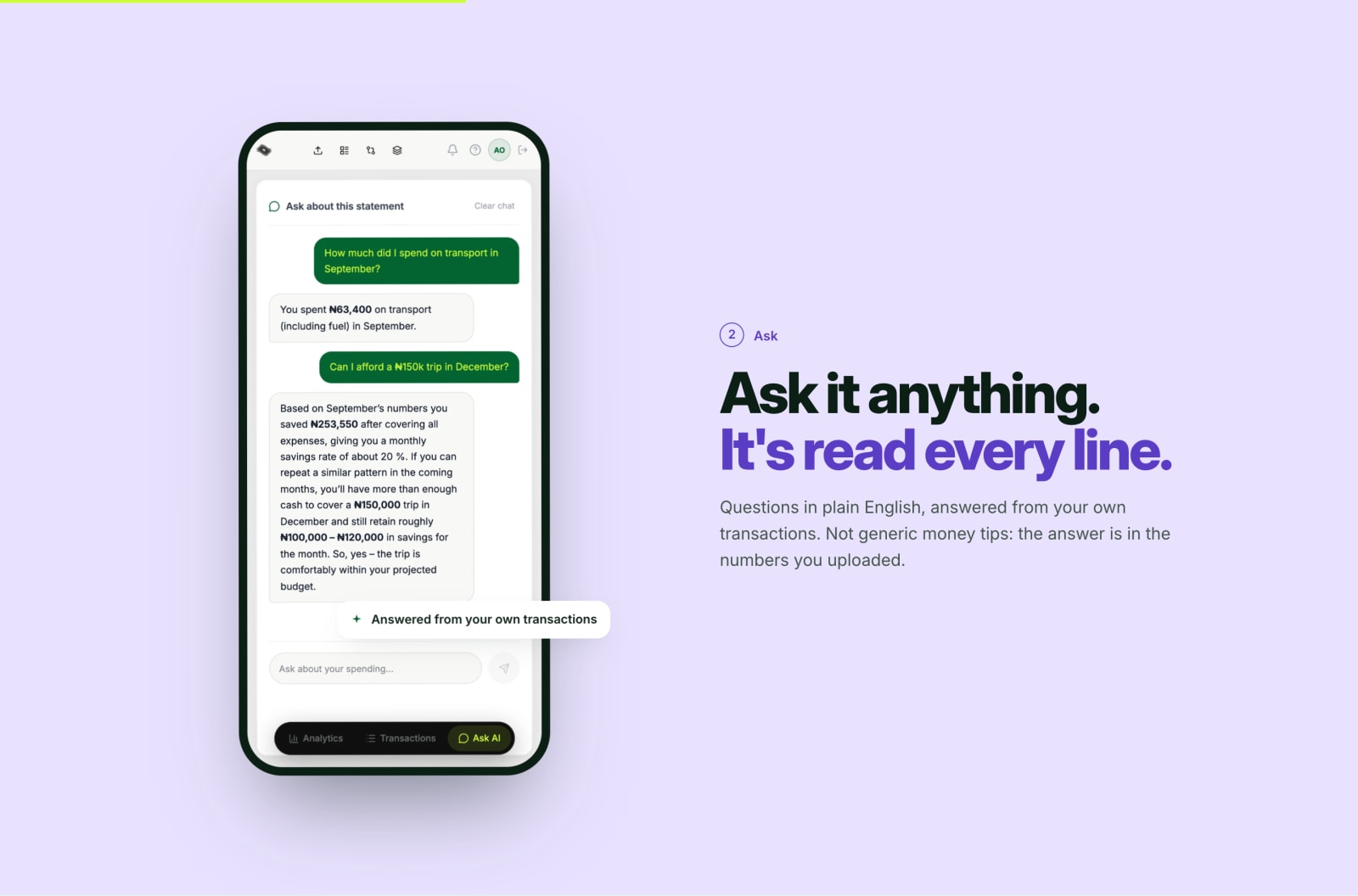
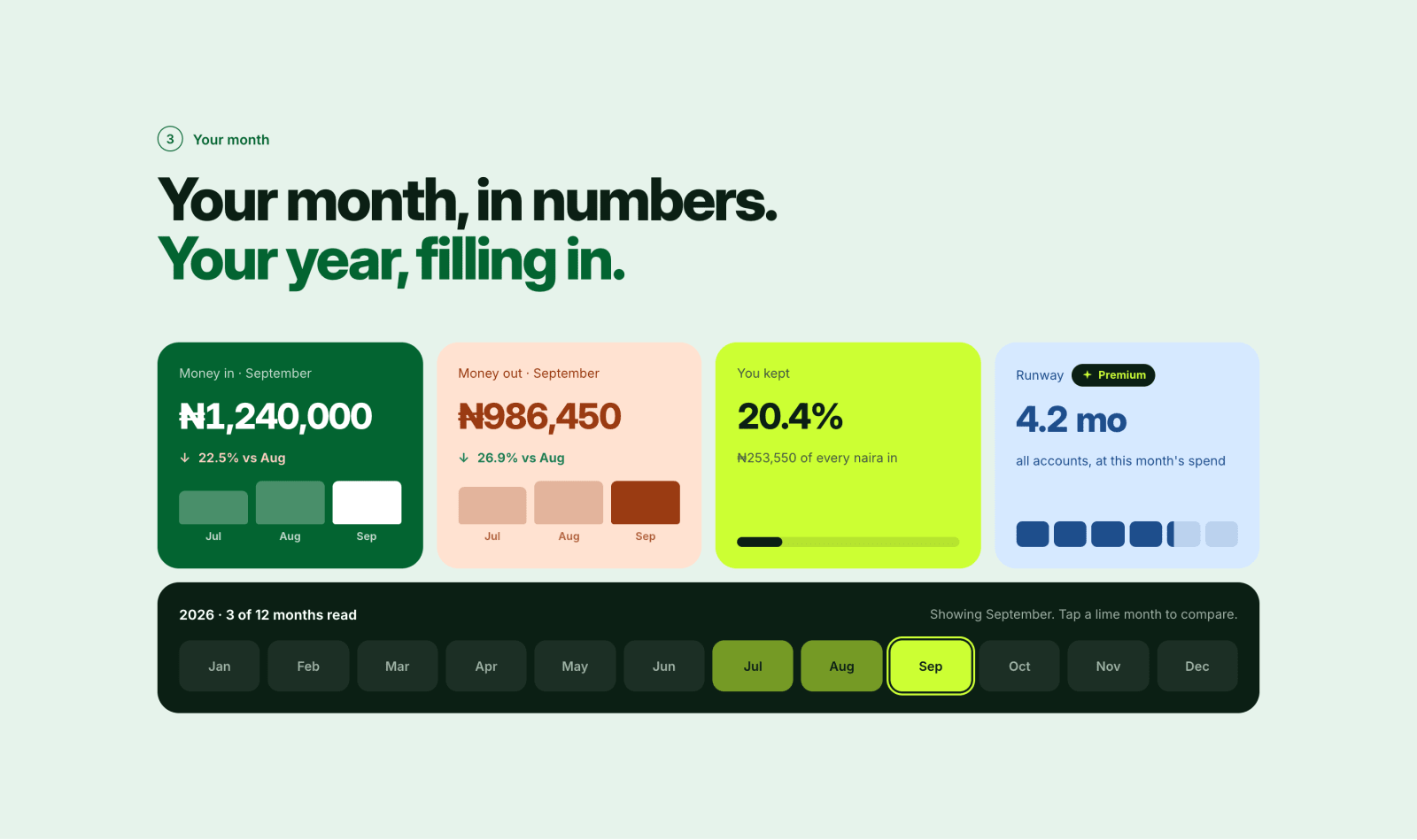
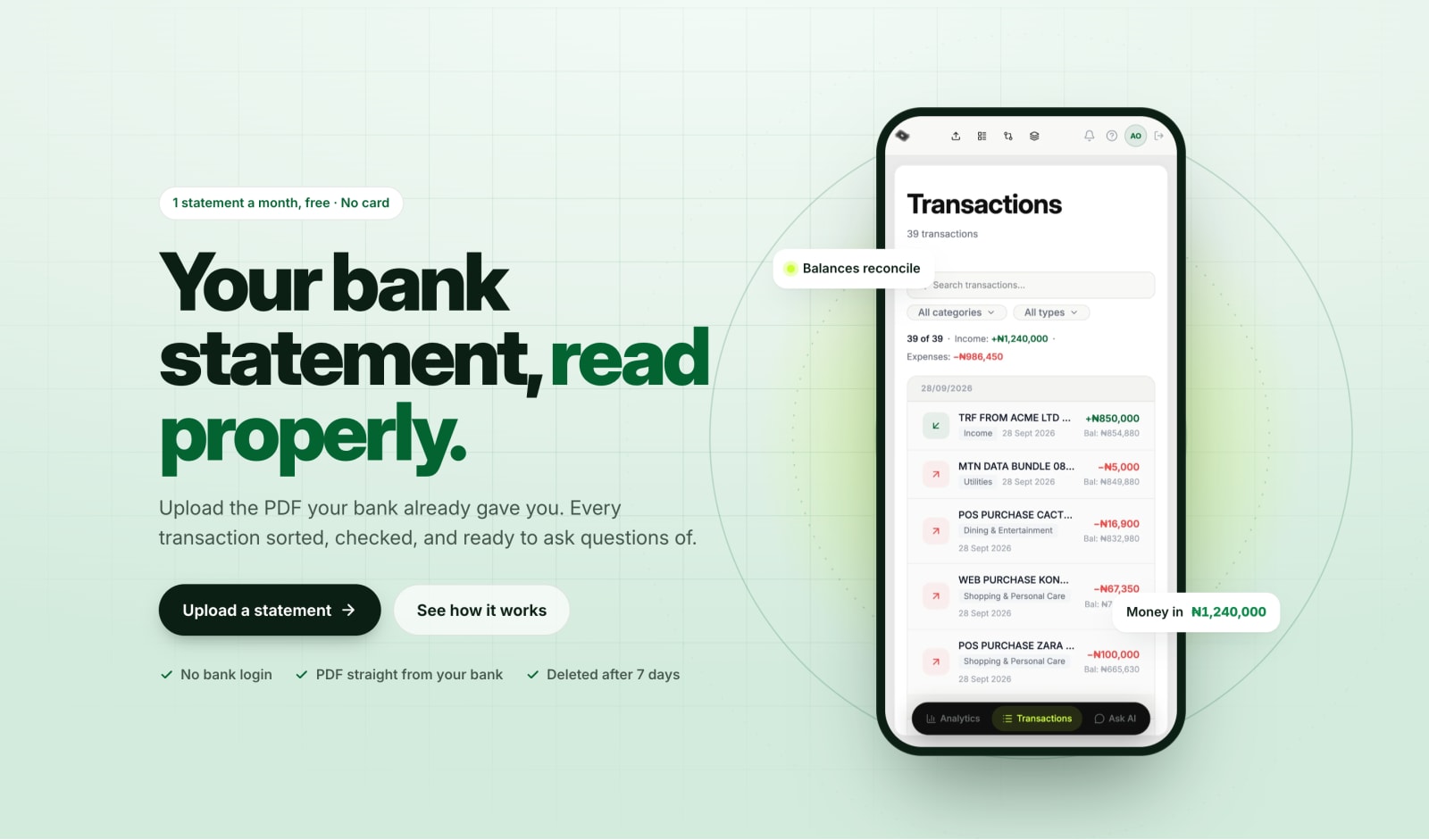
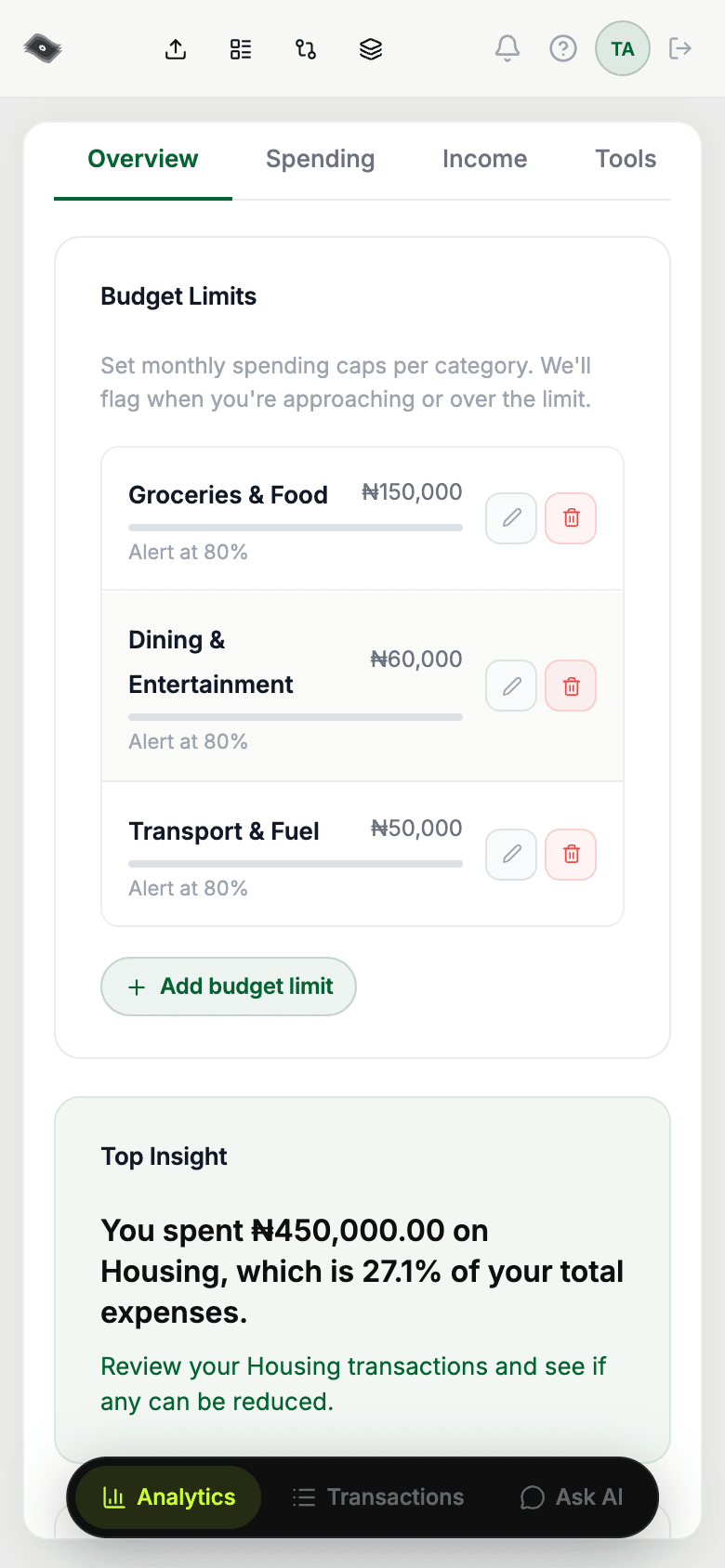
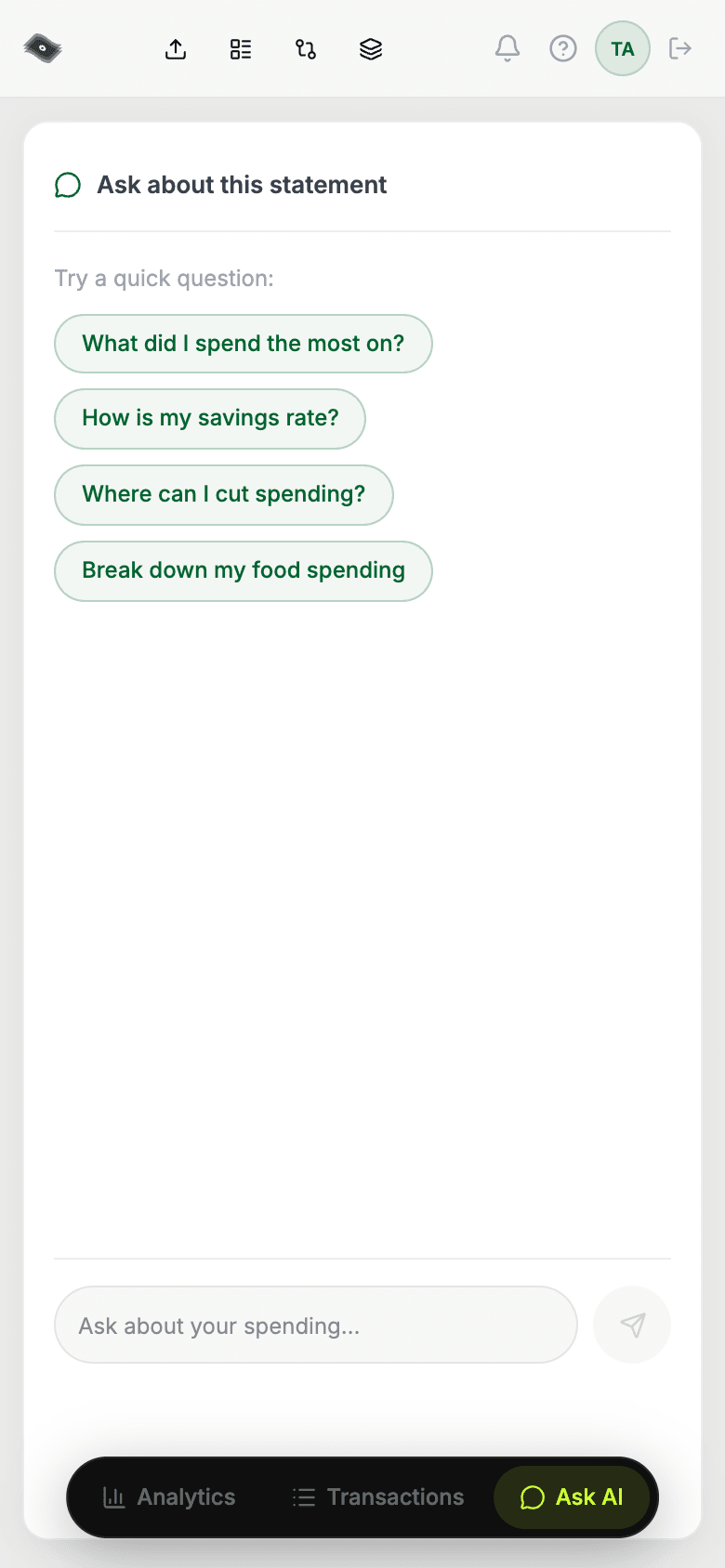
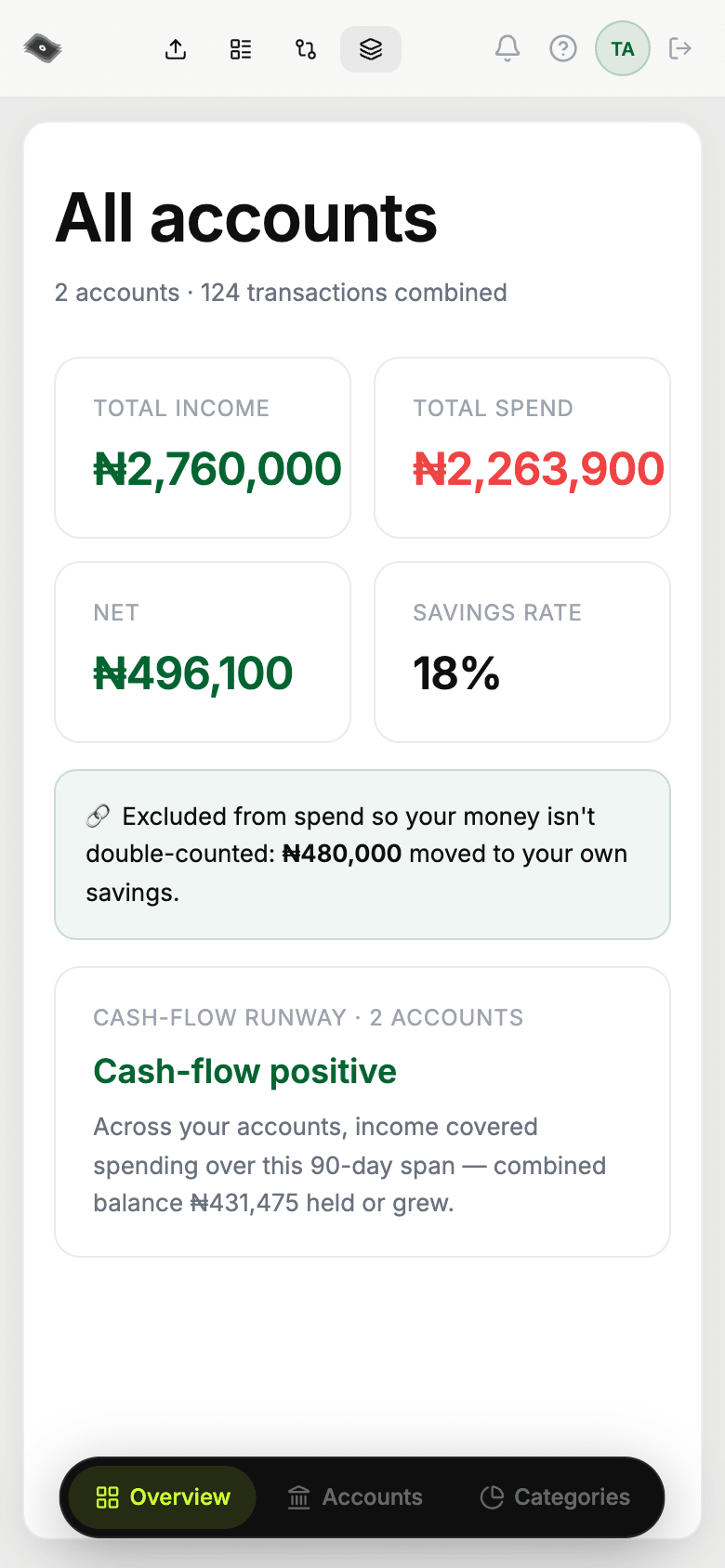
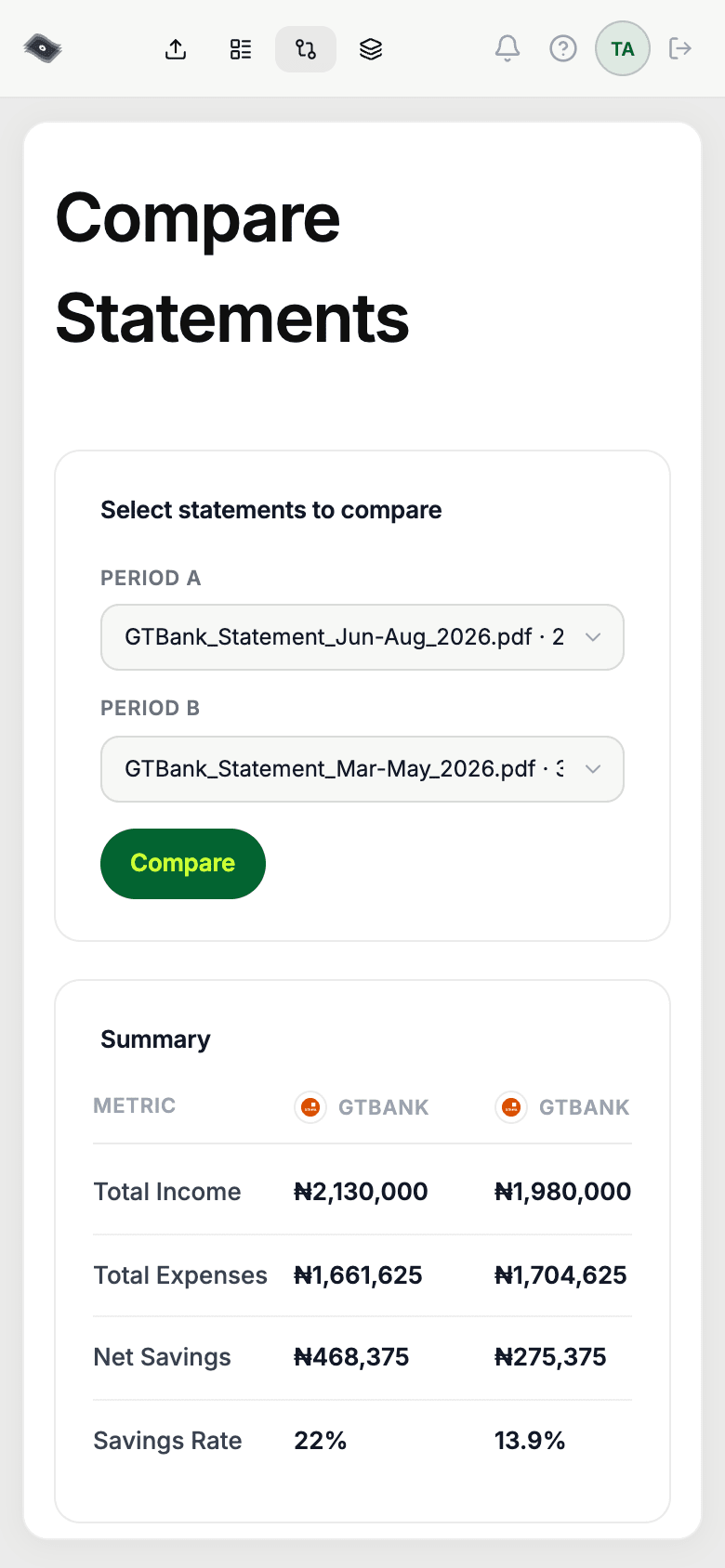
Upload a statement and you land on analytics split into Overview, Spending, Income, Tools and Financial Health, so no single screen tries to say everything. Every transaction is searchable and re-categorisable in place, and Premium adds Ask AI, All Accounts and Compare. These screens use a sample statement for a fictional account, run through the real analytics code.
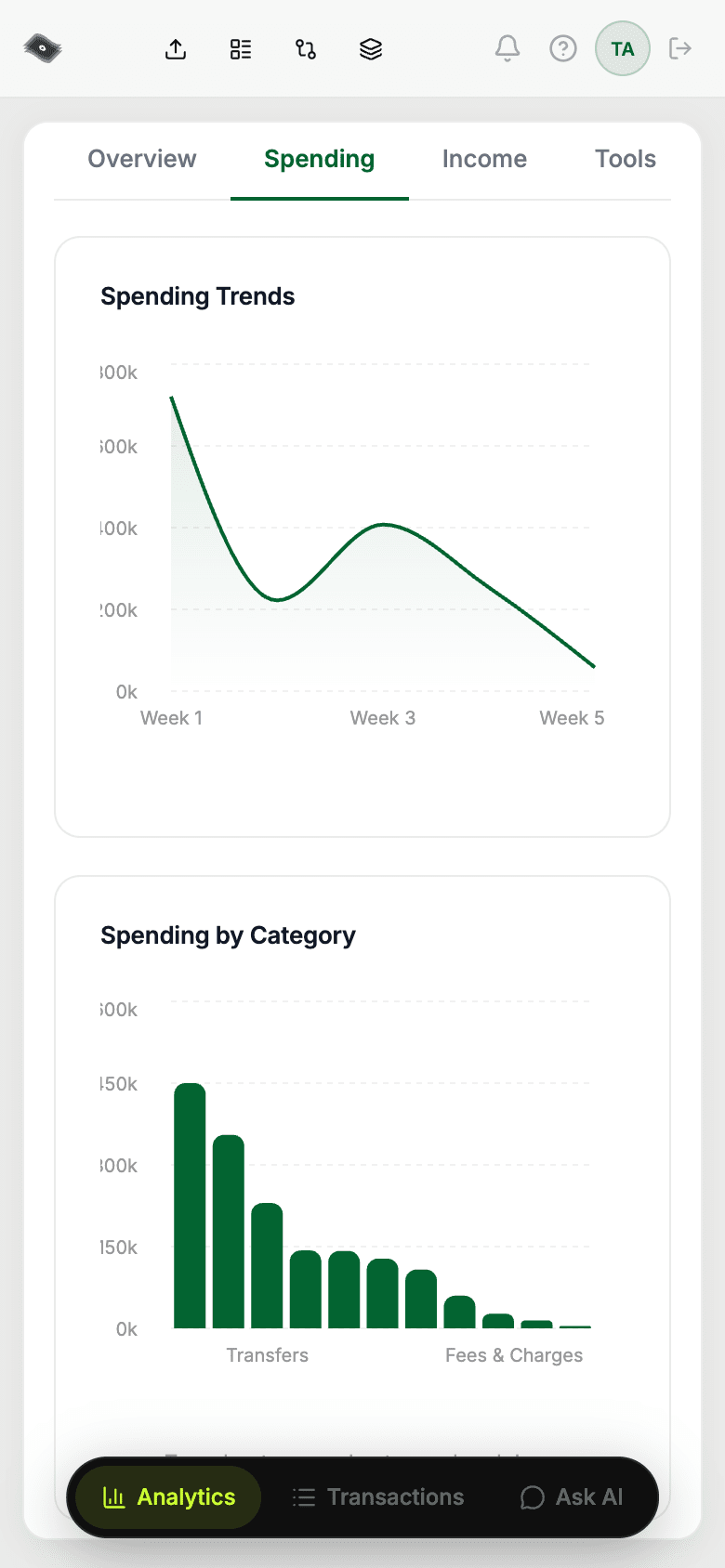
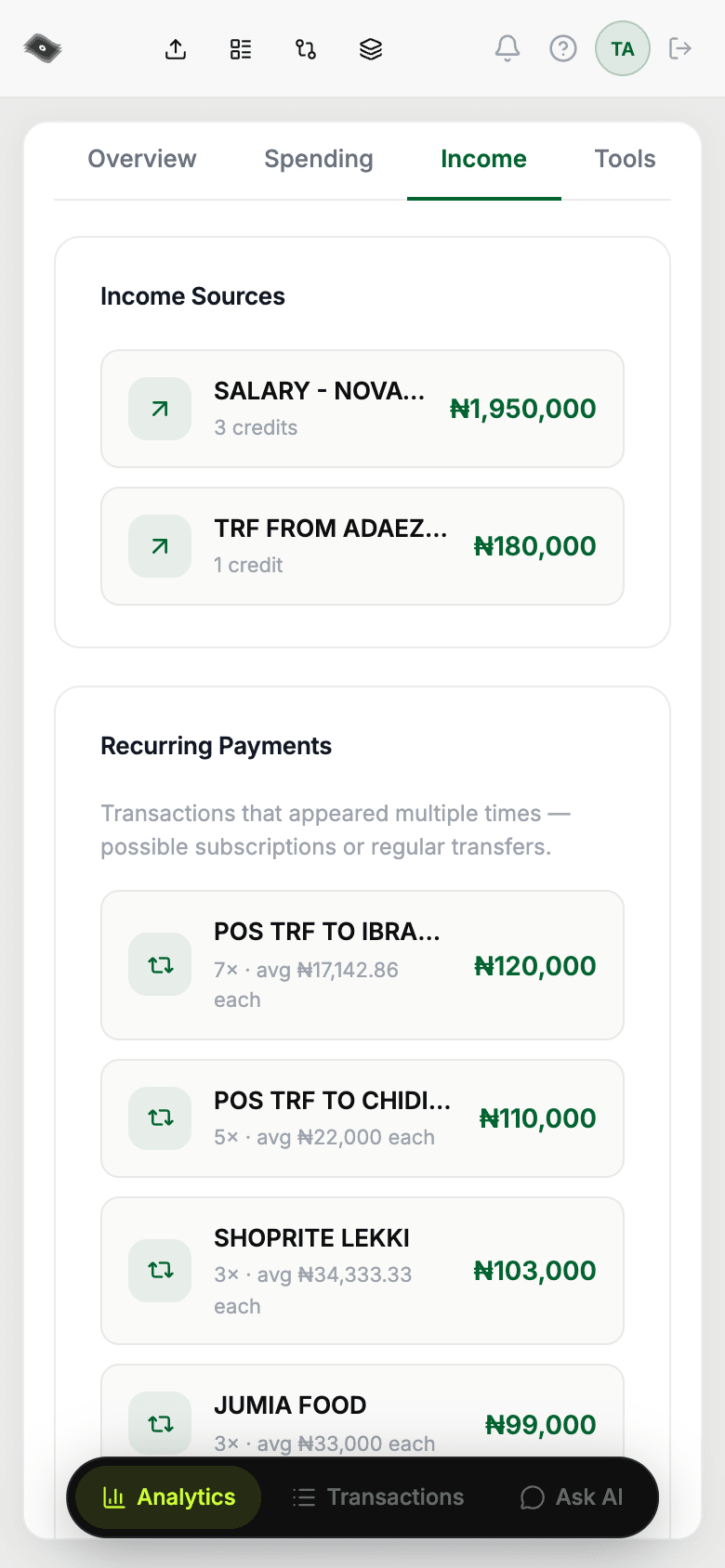
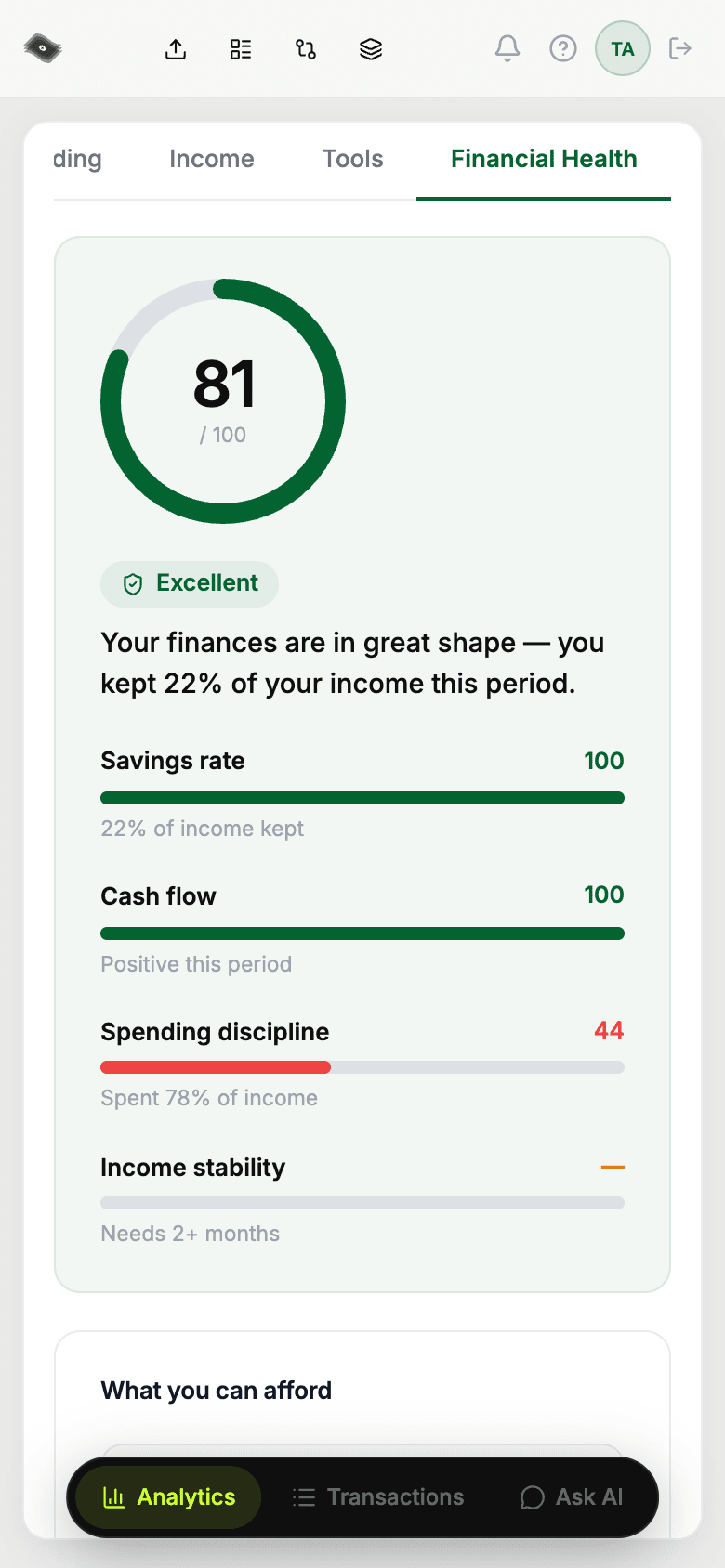
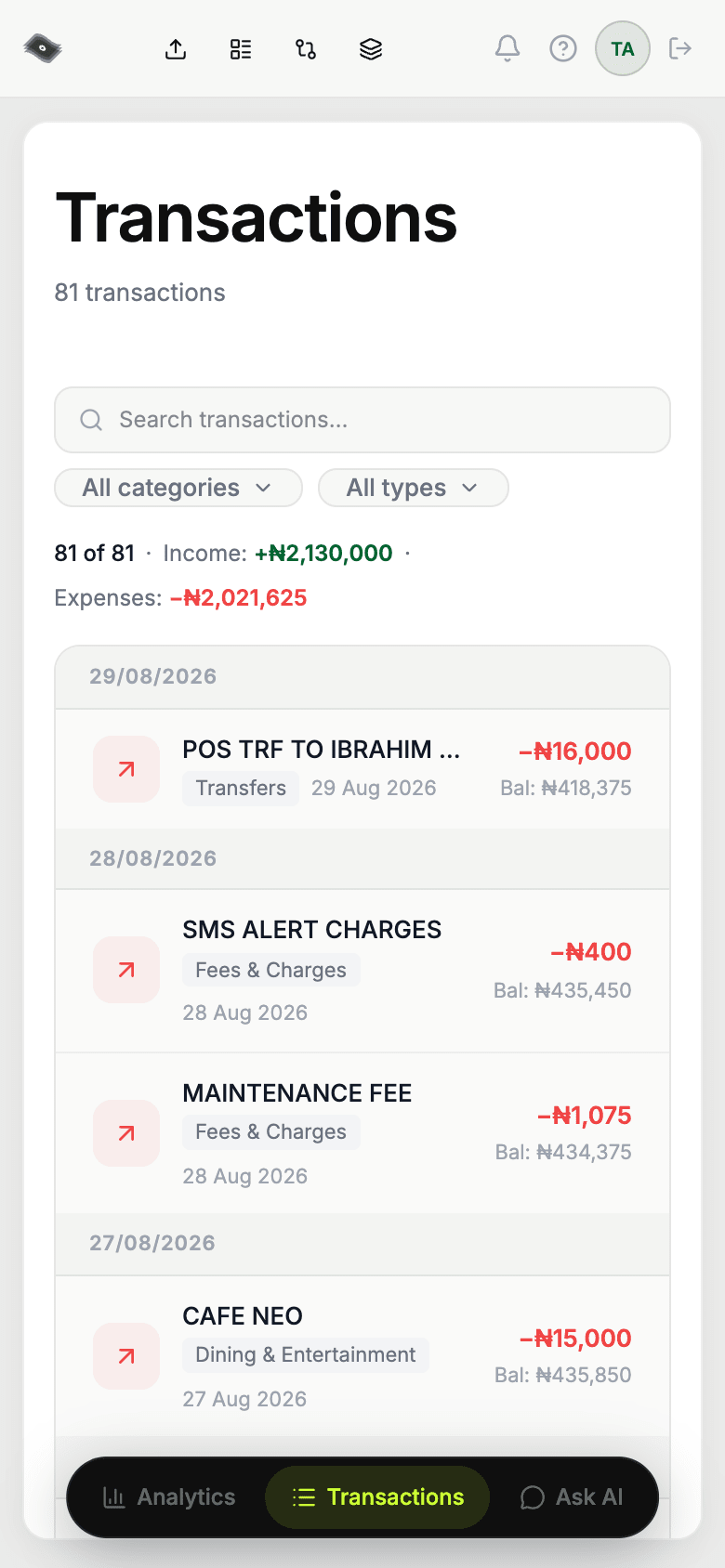
one engine
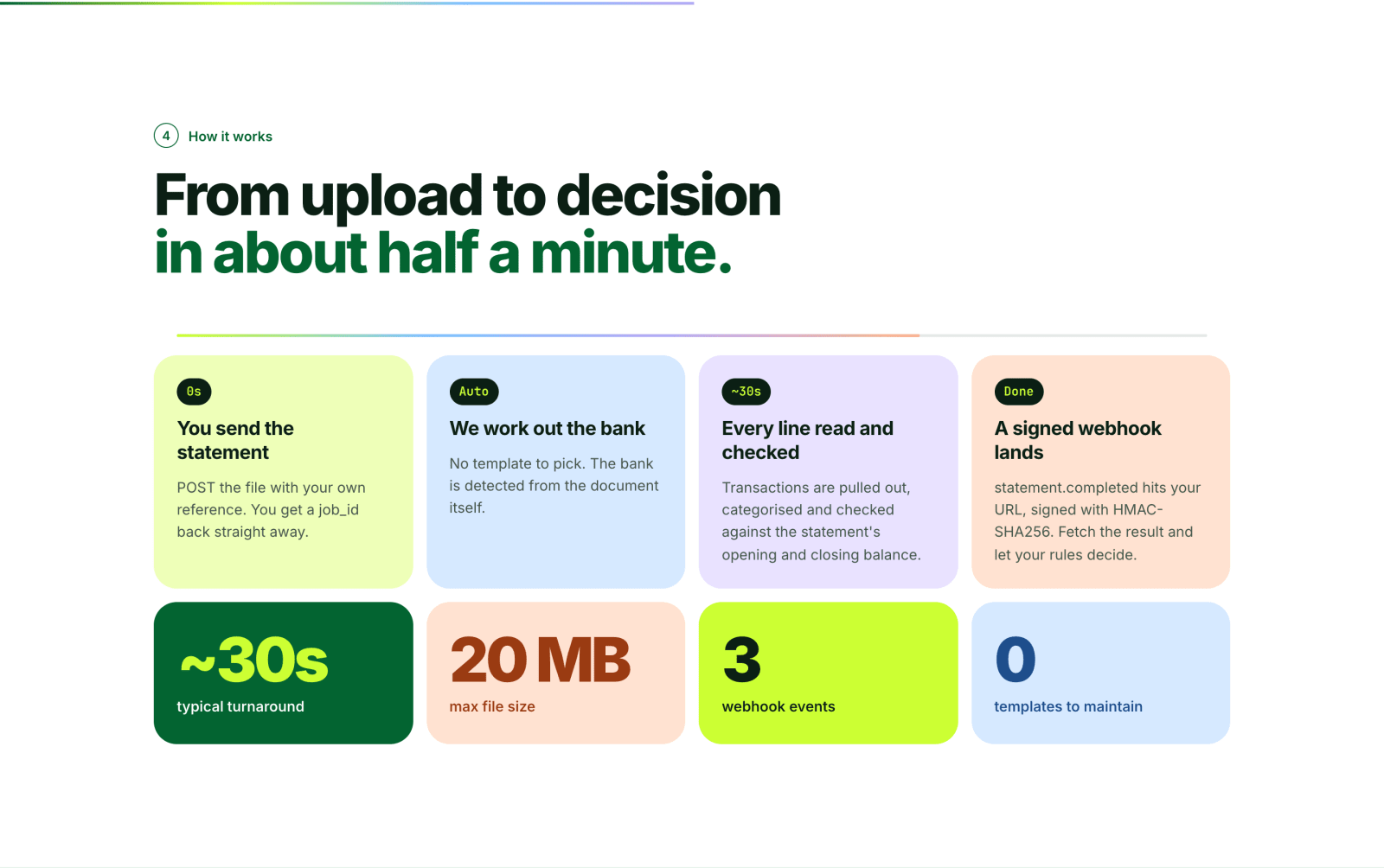
Every Nigerian bank formats statements differently: text PDFs, scans, password-protected files, mobile-money layouts. Parsing in each backend would drift. So we made extraction its own product: one private engine that both backends install pinned to the same version, so a bank added once ships everywhere.
Support grew from 11 banks to 14, and each new bank reached the consumer app and the business API in the same release.
reconciliation
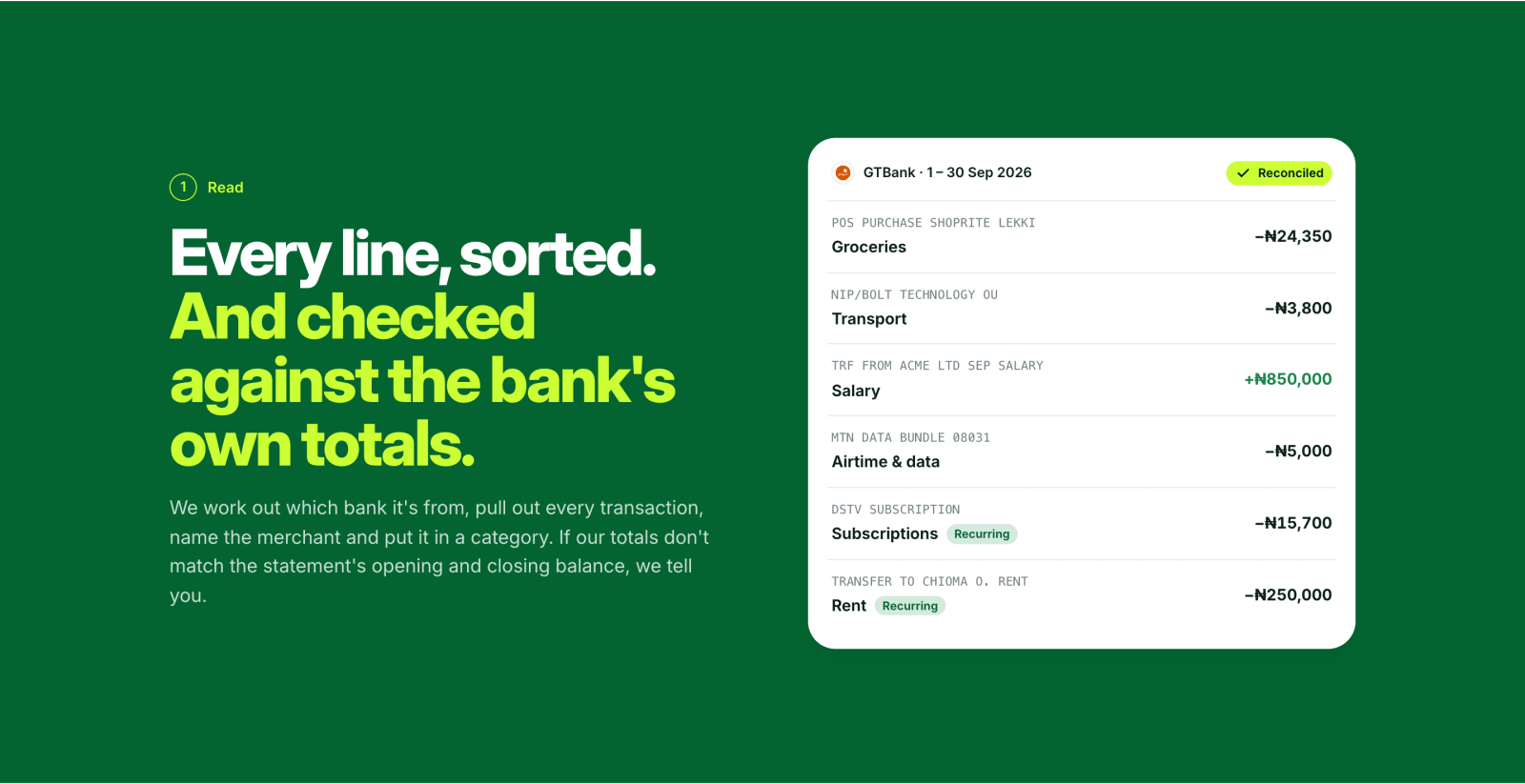
A parser can miss a row at a page break, and a dashboard that quietly under-counts is worse than none: people make money decisions on it. So every statement is checked against its own opening and closing balance, or its printed totals. If it doesn't add up, the product says so.
Incomplete extraction is flagged instead of shown as a smaller total. Recovering a single dropped row only runs for banks we'd verified, and only when there's exactly one place it could be.
savings vs spending
On a statement, a transfer to your own savings wallet looks exactly like spending, which makes careful savers look like big spenders. Spendprofile detects those moves and reports them as moved to your own savings, and keeps interest earned as income. The detection is deliberately conservative: a false match would hide real spending.
The same split runs in analytics, Compare and Ask AI, so the numbers never disagree between screens.
the visa use case
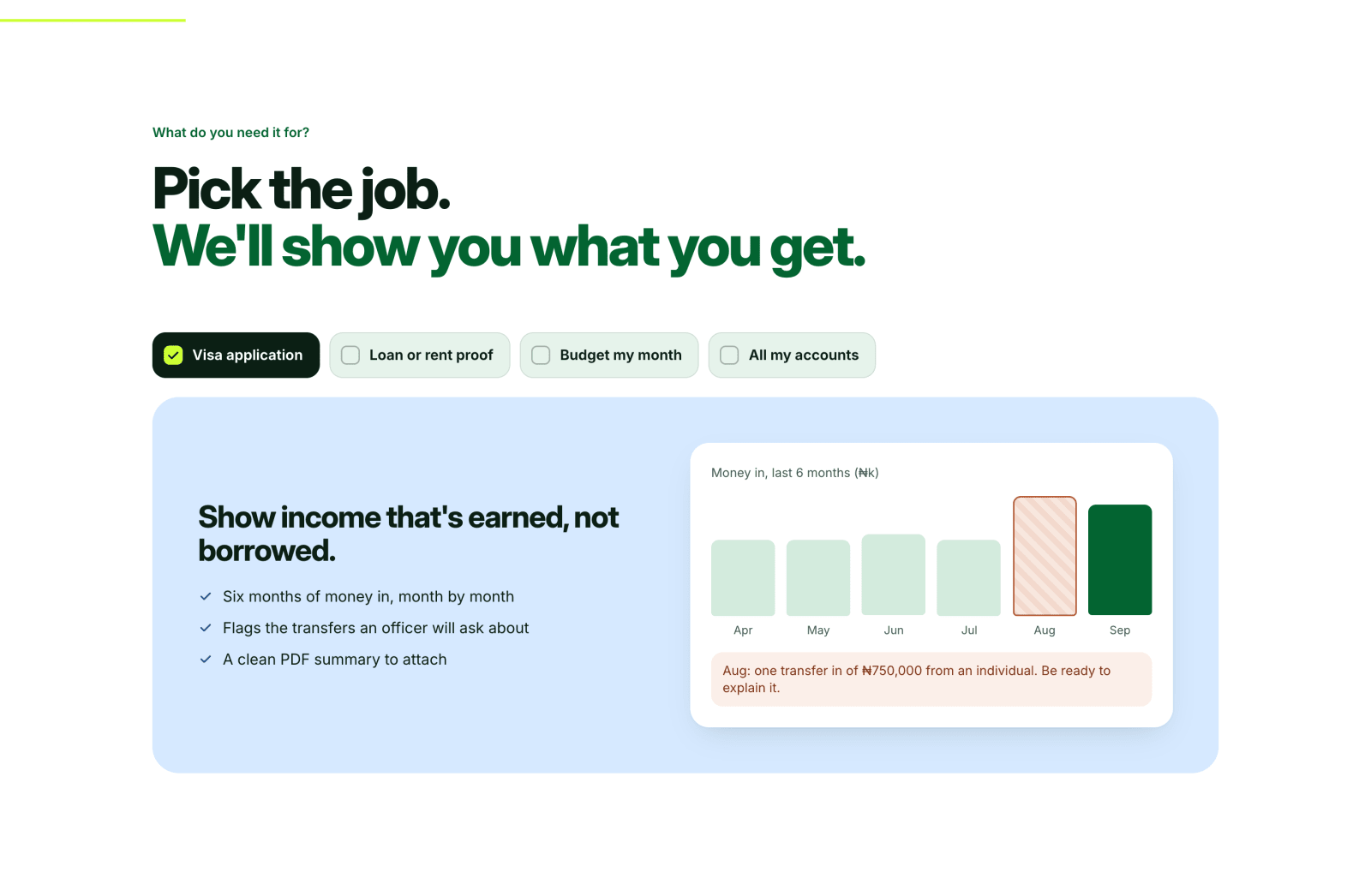
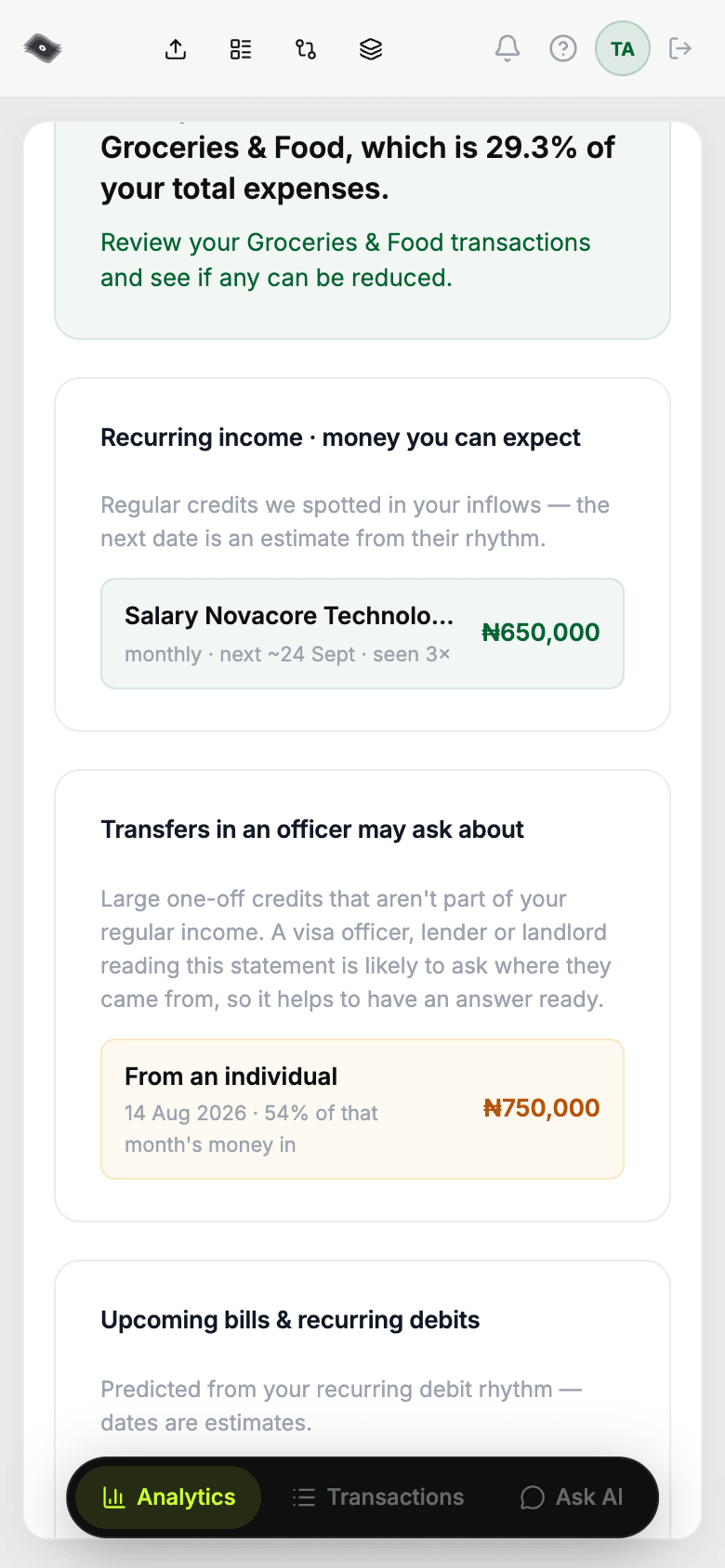
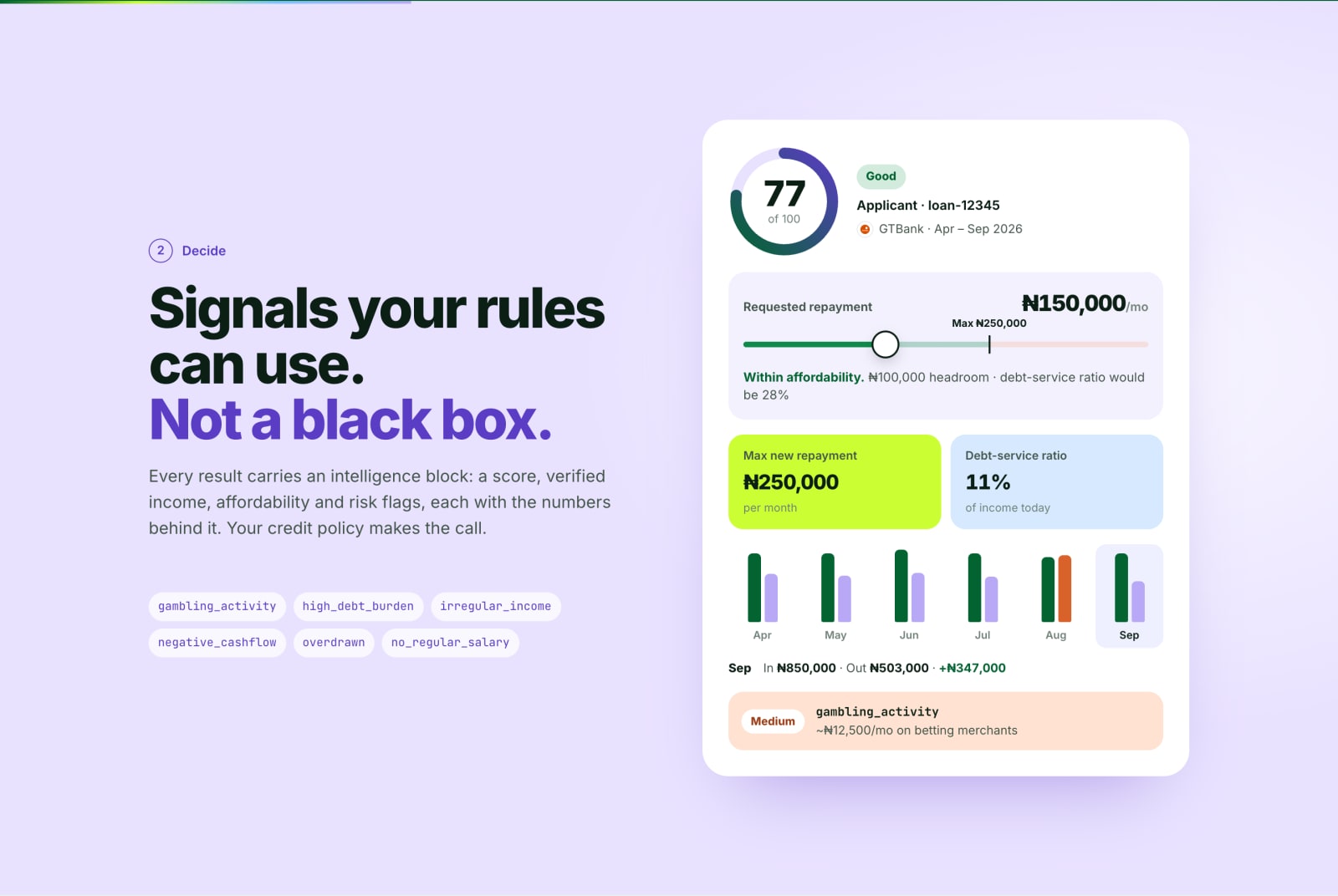
Someone reading a statement for a visa, loan or lease wants income that's earned, not borrowed. A large one-off transfer from a person stands out, and gets questioned. So the analytics now flag the transfers an officer will ask about, with the numbers behind each flag.
The landing page leads with this job: pick Visa application and it shows income that's earned, not borrowed, and flags the transfers an officer will ask about.
for business
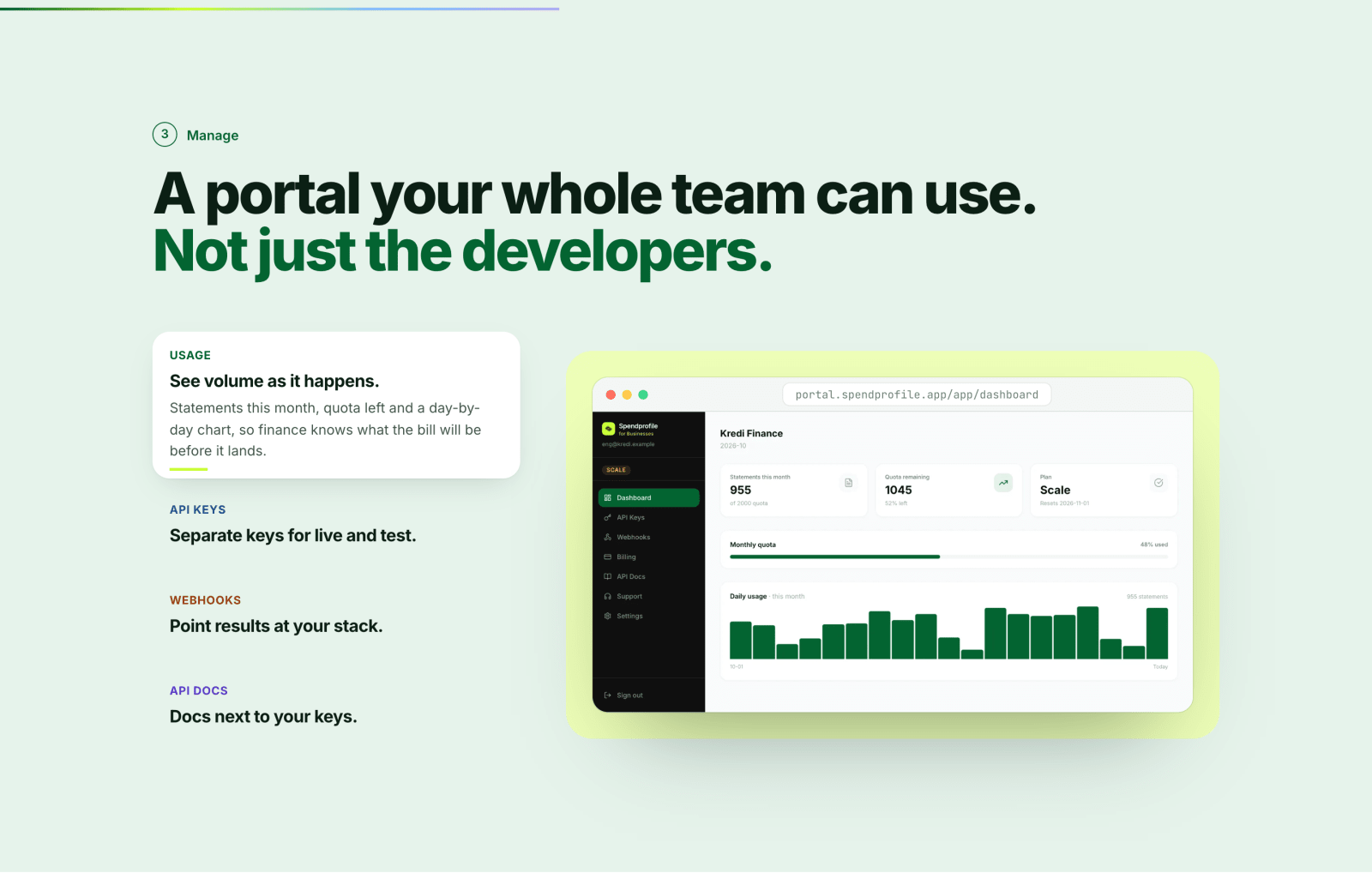
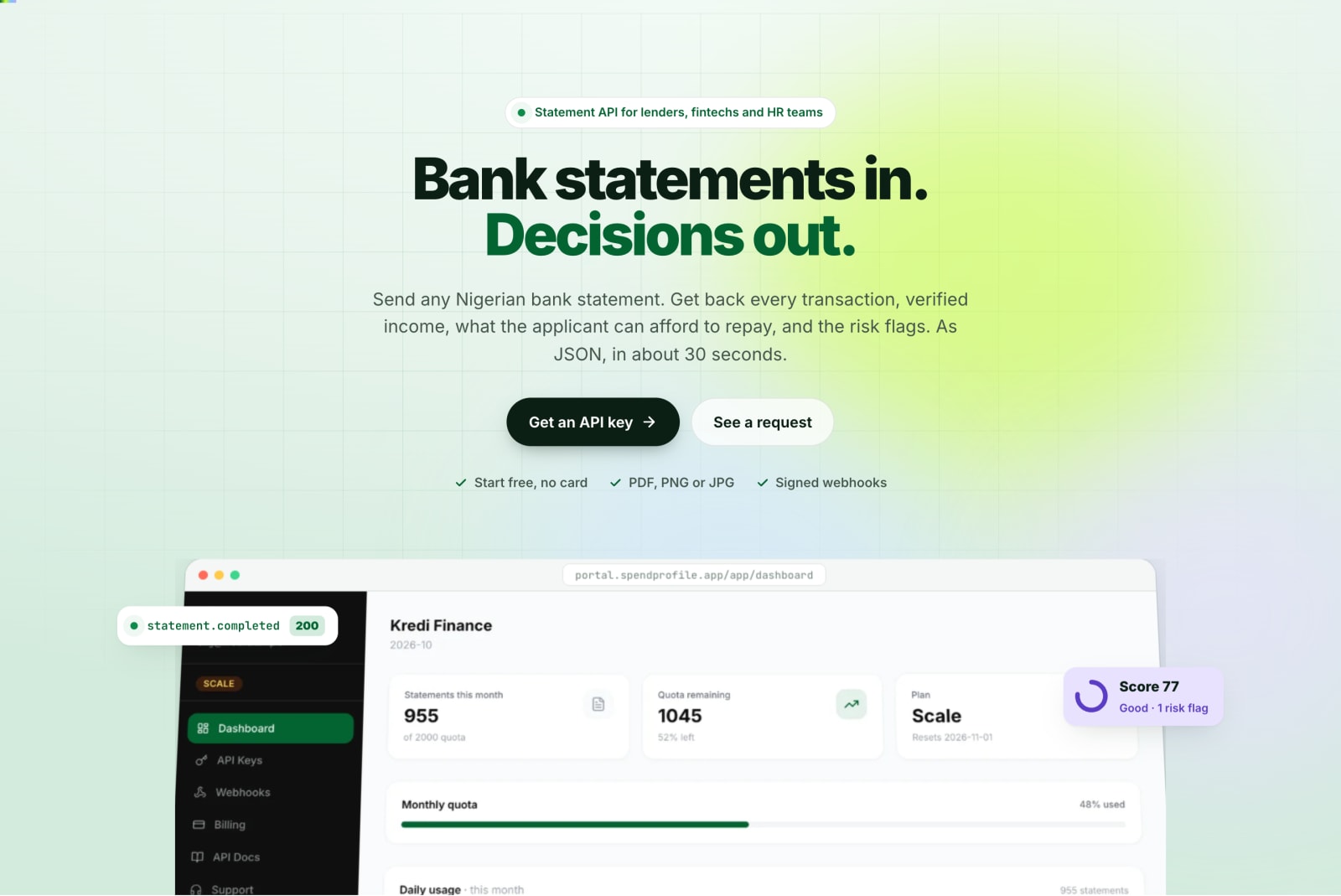
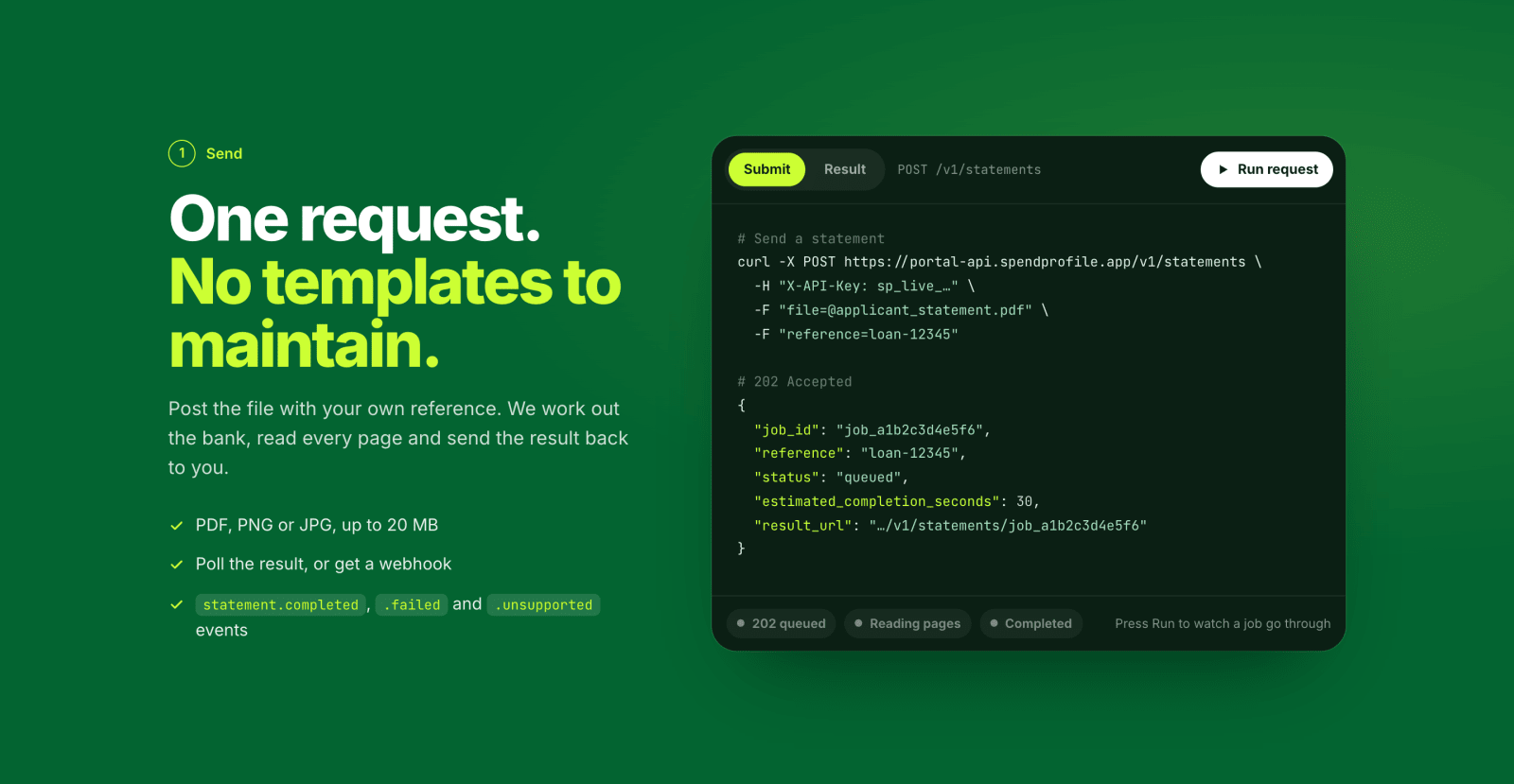
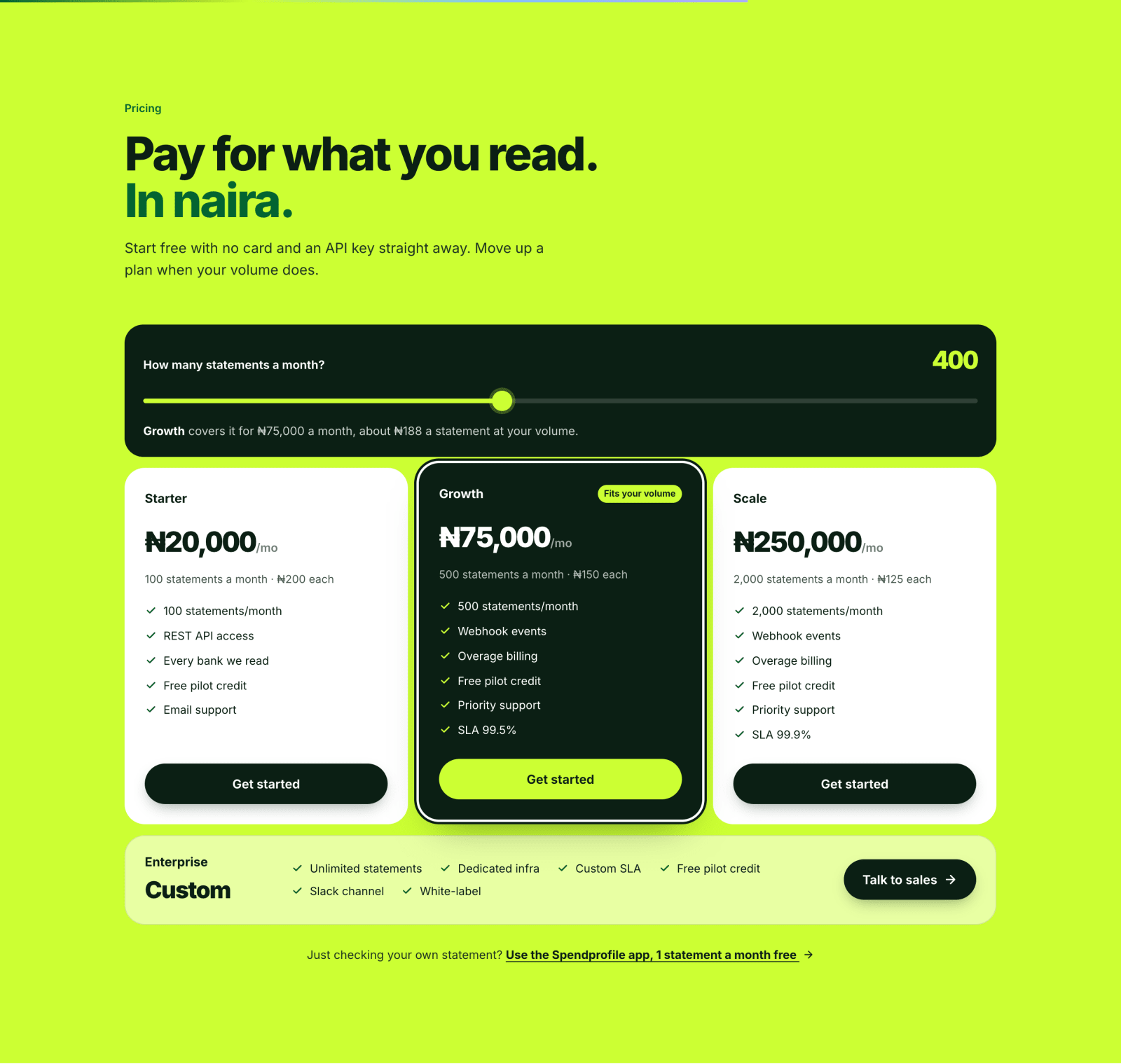
Lenders, HR teams and visa consultants don't want a dashboard, they want one API call: post a statement, get structured JSON back, with income, affordability and risk signals. The portal leads with the request a developer will actually make, then shows the decision block a credit team reads, and keys are scoped, hashed and revocable.
open data
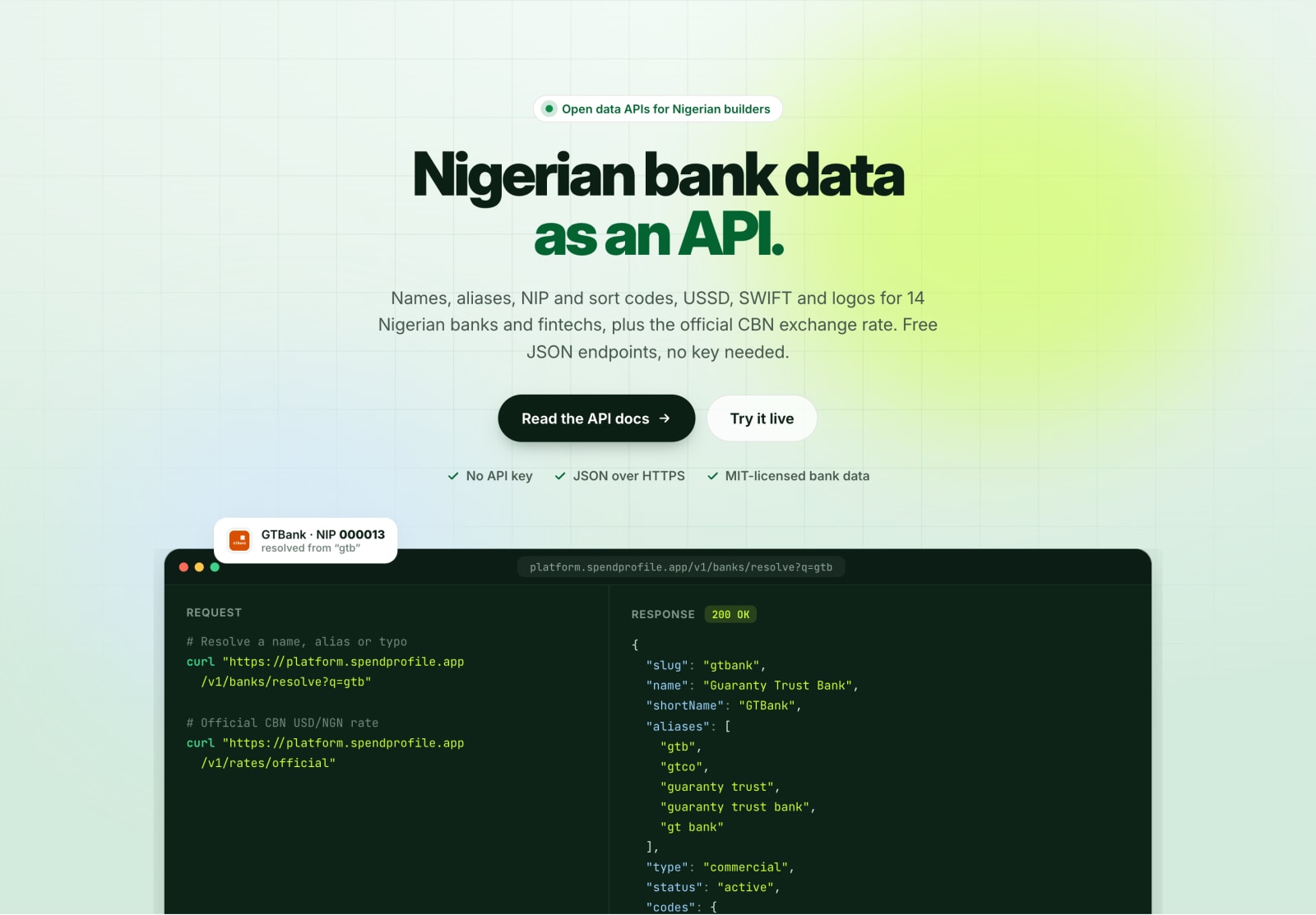
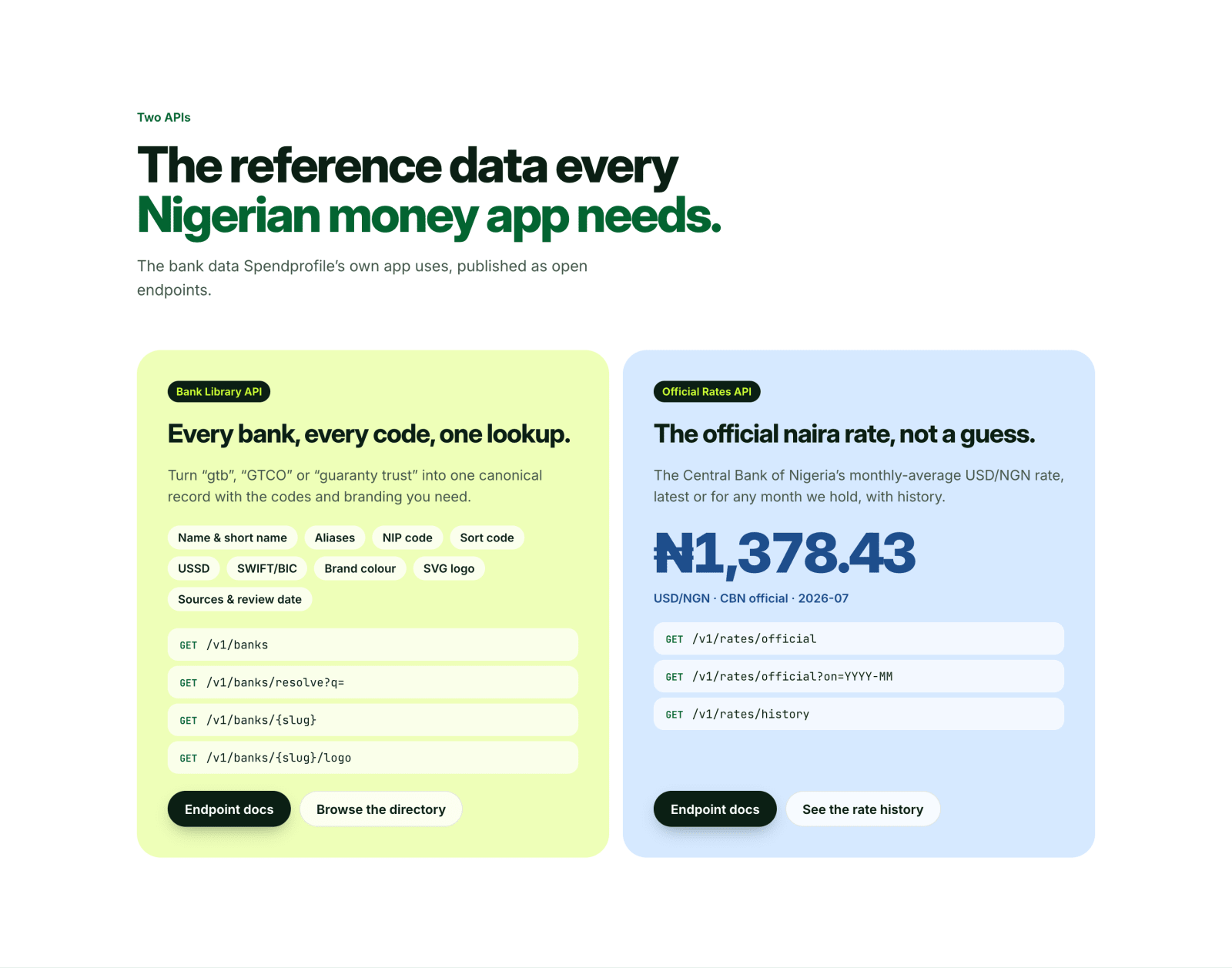
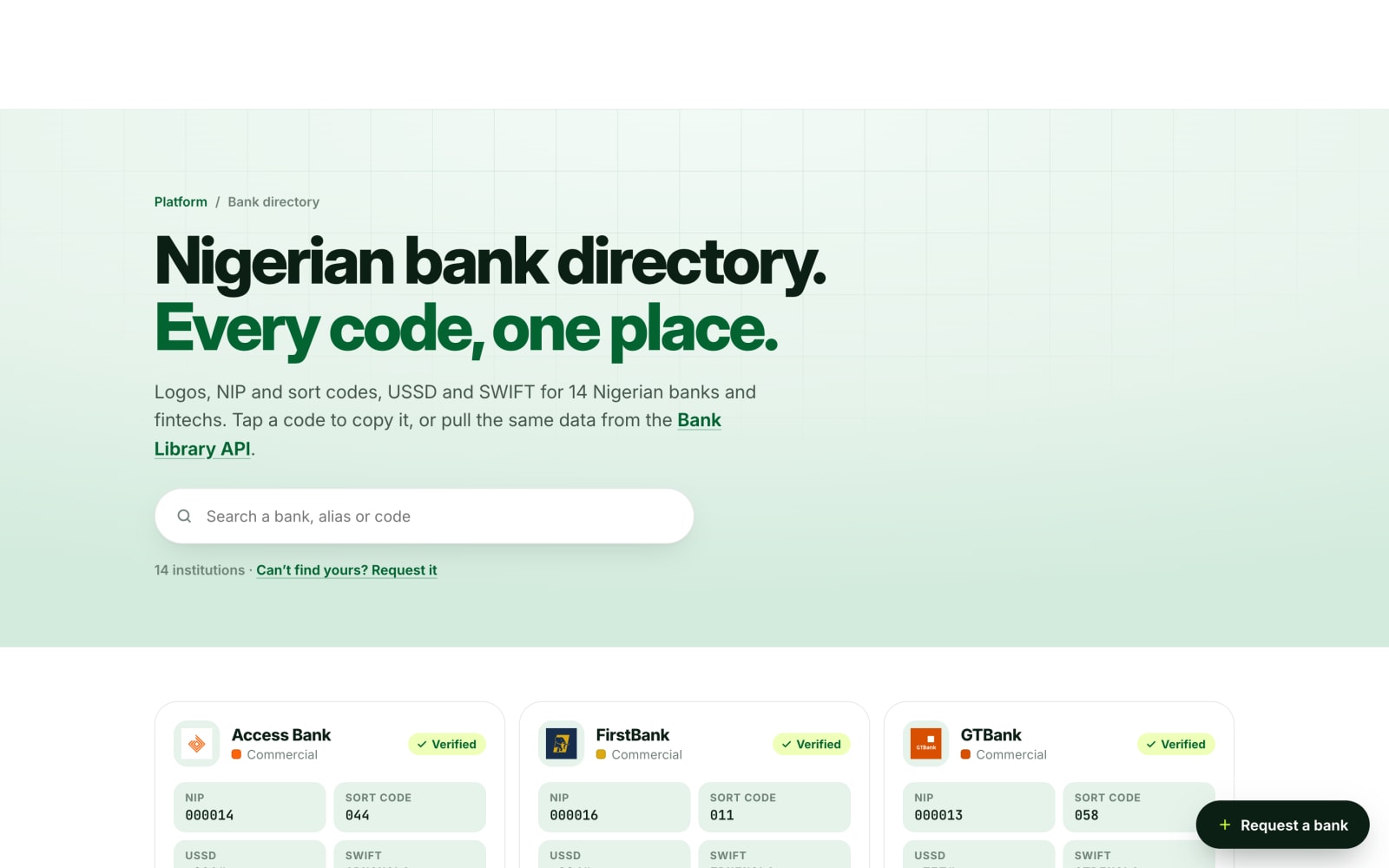
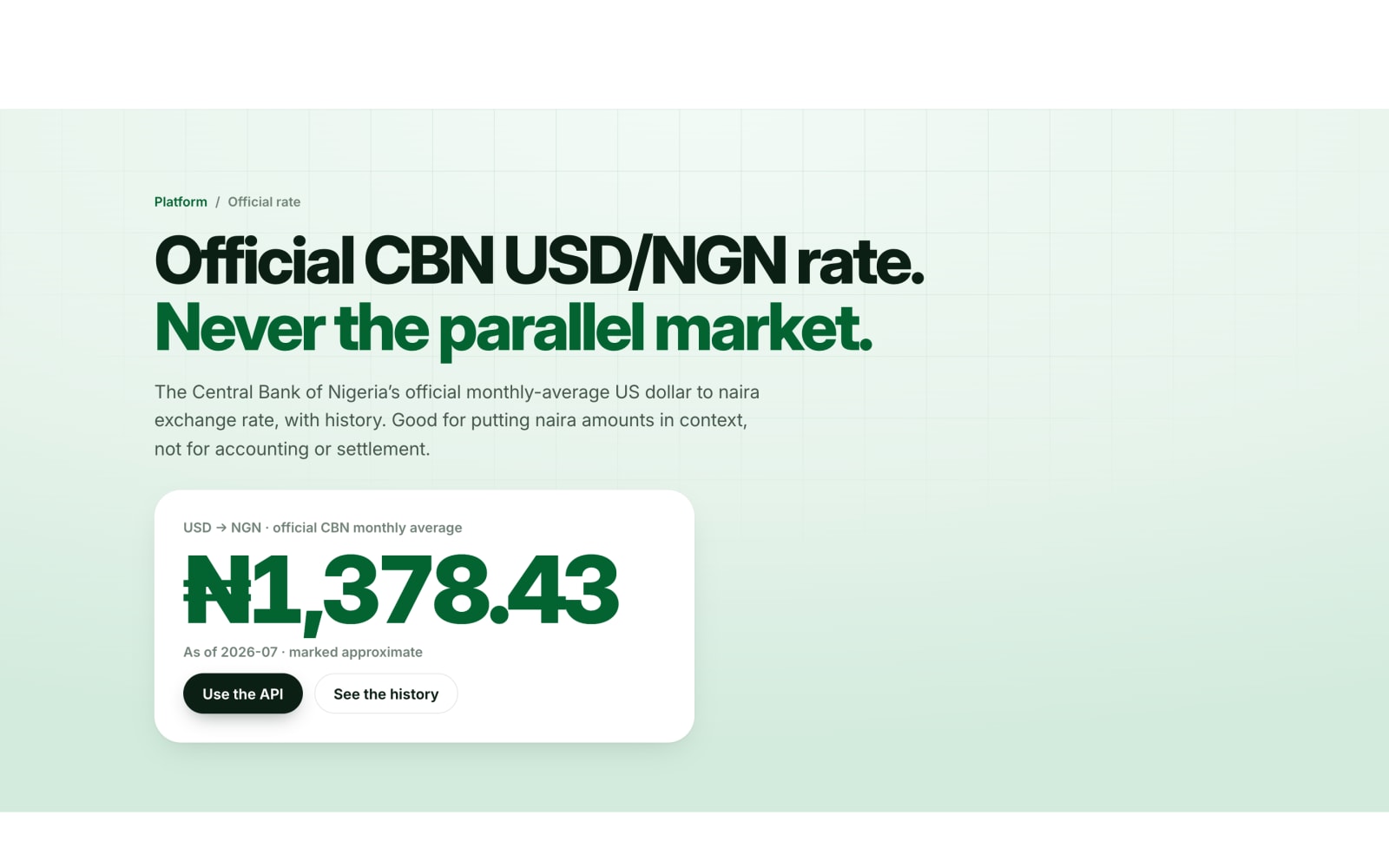
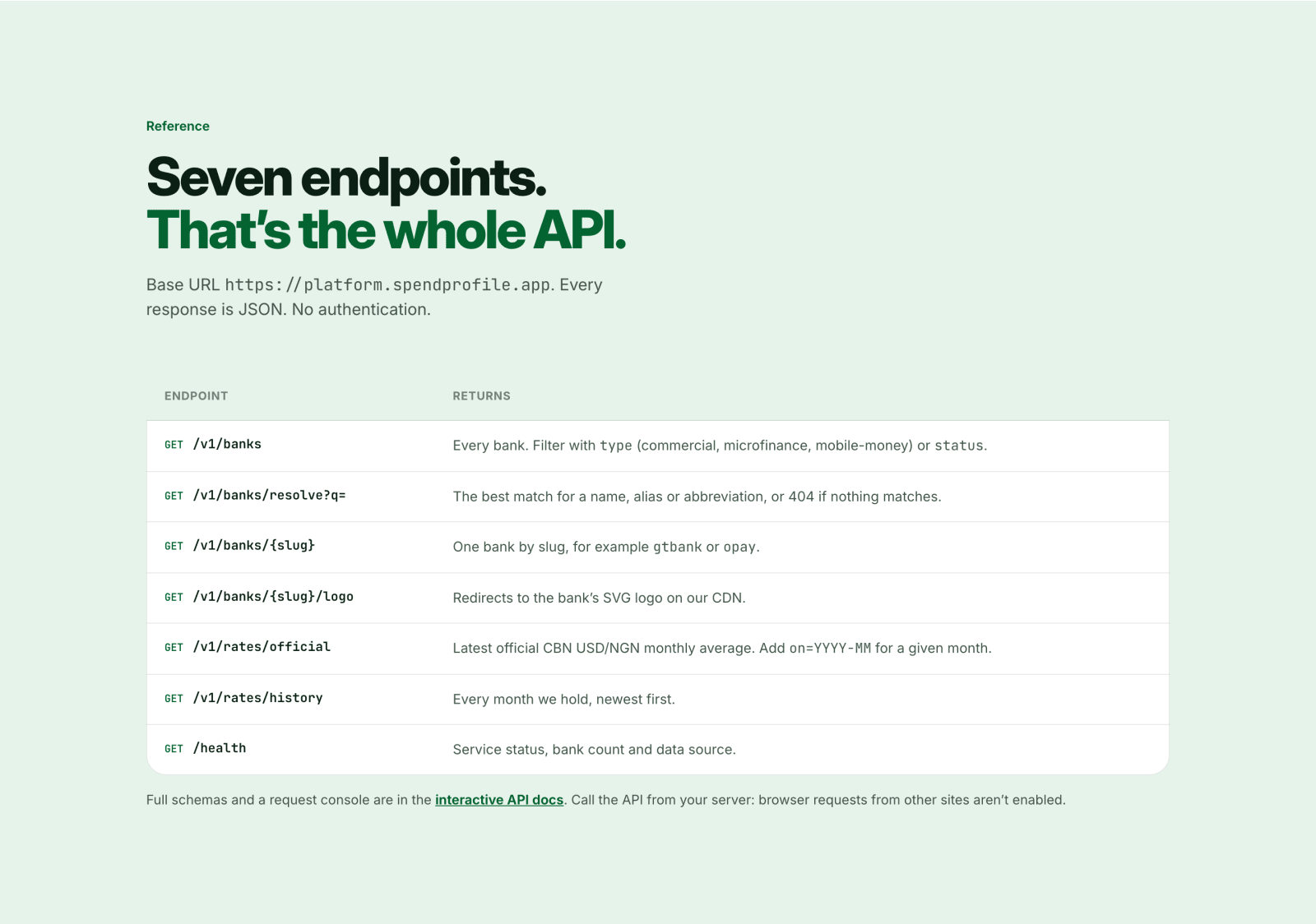
Bank names, routing codes and logos had been copied into four apps and were drifting. That data is useful to every Nigerian fintech, so we pulled it into an open, MIT-licensed library on npm and PyPI, served by a small developer platform with a bank directory and the official CBN rate. The logic that actually reads statements stays private.
privacy
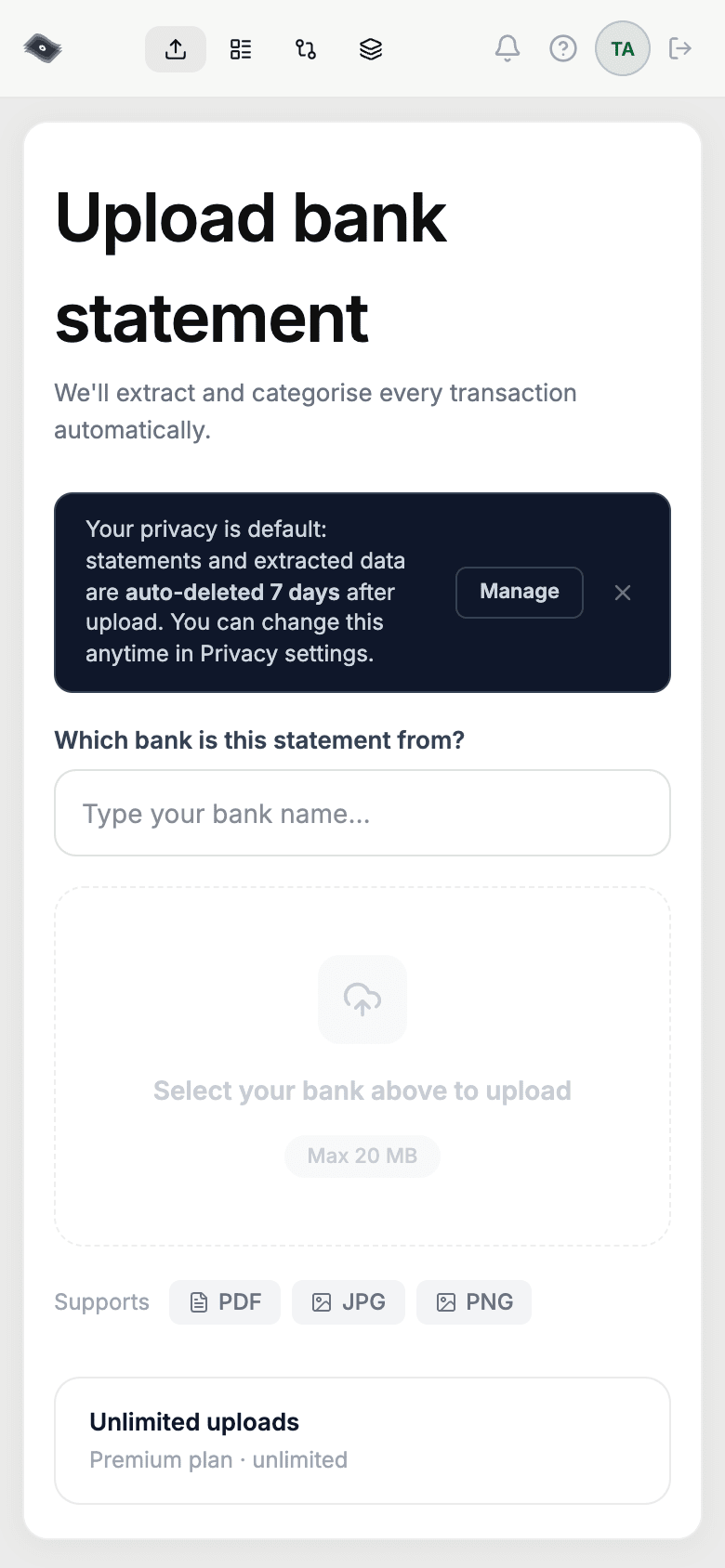
A statement is about as sensitive as a document gets. Auto-delete after seven days is on by default, and it's stated on the upload screen before you pick a file. Deleting a statement removes the file and the extracted data, the only cookie is the essential sign-in one, and statements used to teach the engine a new bank need explicit consent.
the redesign
The three products had drifted apart visually. We redesigned all three into one visual world with an audience switch for Individual, Business and Platform, built around the jobs people actually have, like a visa application, rent proof or a monthly budget, and around the product's real screens and honesty: no bank login, deleted after seven days, totals checked.